





Hyaluronic acid is one of the most well-known ingredients in skincare and aesthetic medicine. It is mentioned in the composition of serums and creams, in the names of procedures, in descriptions of injection techniques, and even in recommendations for "internal hydration." However, due to its popularity, many myths have accumulated around HA: for some, it provides perfect hydration, while for others, it "dries and tightens"; some confuse biorevitalization with fillers, while others try to assess effectiveness by the percentage in the composition.
In this guide, we will explore what hyaluronic acid is and how it works, the different forms it comes in (sodium hyaluronate, various molecular weights, cross-linked gels), how cosmetics differ from injections, and how to safely choose care or procedures for your needs. We will also provide practical application schemes (to avoid tightness), explain common mistakes, and compile the most frequently asked questions in a short-answer format.
Briefly: 7 Theses
- Hyaluronic Acid (HA) is a natural substance that binds water and helps maintain tissue hydration, including the skin.
- In cosmetics, HA primarily works as a moisturizer: it attracts and retains moisture on the surface and in the upper layers of the skin.
- Sodium Hyaluronate is a common form of HA in compositions; the effect depends not on the "%," but on the formula and combinations.
- The feeling of tightness usually arises from improper application (on dry skin without cream on top) or very dry air.
- For the best effect, HA is applied to slightly damp skin and sealed with cream (especially in winter).
- Injection techniques (biorevitalization/skin boosters/fillers) involve a different level of impact, different tasks, and risks, so the doctor and safety protocols are important.
- HA is suitable for most skin types, but caution and a simple formula are needed for active dermatitis, rosacea flare-ups, or after aggressive procedures.
What is Hyaluronic Acid in Simple Terms
Hyaluronic acid is a component naturally present in our body and has the ability to bind water. In skincare, it is often called a "moisture magnet": it helps retain water in the stratum corneum, making the skin more comfortable, smooth, and visually "quenched."
It is important to understand: in cosmetics, hyaluronic acid mostly works on the surface and in the upper layers of the skin. This is normal and sufficient for a noticeable moisturizing effect. Injection techniques are a different story: they involve different forms, different techniques, different tasks, and a different level of responsibility.
Where It Is in the Body and What It Does
Hyaluronic acid is found in the skin, connective tissues, joints, and eye structures. In different tissues, it performs a similar role — maintaining hydration and "slip" in environments where moisture and elasticity are needed. In the context of cosmetology, we are most interested in its contribution to the feeling of hydration, firmness, and overall "quality appearance" of the skin.
Forms and Types: HA, Sodium Hyaluronate, Molecular Weight
On product labels, you can find different names: Hyaluronic Acid, Sodium Hyaluronate, Hydrolyzed Hyaluronic Acid, etc. They differ in molecular form, stability, solubility, and behavior in the formula.

Sodium hyaluronate is one of the most common forms in cosmetics: it works well in aqueous serums and gels. But the main thing is not to chase numbers. A high percentage of HA does not guarantee a better effect. It is much more important how the product is formulated: whether there are components that help retain moisture, whether the base is not dried out by alcohol, and whether the barrier is supported by lipids.
High Molecular vs Low Molecular
Simplified: molecular weight affects how HA behaves on the skin's surface. High molecular forms often work as a moisturizing "film," reducing moisture loss and giving a feeling of smoothness. Low molecular forms can provide a different sensory experience and better combine in multicomponent formulas.
Many quality products use mixtures of different forms and molecular weights — this helps balance the skin feel, hydration, and compatibility with SPF and makeup. More about the difference — in the material "Low Molecular and High Molecular Hyaluronic Acid: What's the Difference".
Cross-Linked HA (for Fillers) — What It Means
In fillers, cross-linked (cross-linked) hyaluronic acid is used — it is a gel that retains its shape longer and provides volume. Cross-linking affects density, viscosity, and duration of effect. This is a medical field: the choice of drug, injection technique, knowledge of anatomy, and safety protocols are critically important. Practical analysis of filler safety — in the article "Hyaluronic Acid-Based Fillers: Safety, Risks, and How to Reduce Them".
Hyaluronic Acid in Cosmetics: What It Really Gives to the Skin
The main effect of HA in cosmetics is hydration and comfort. The skin may appear smoother, less "wrinkled" from dehydration, with a better feeling of firmness. But HA itself does not "repair" the barrier. If the skin loses water, it is important not only to attract moisture but also to help retain it — with the right cream, lipids, gentle cleansing.

For Which Skin Conditions HA is Most Appropriate
- Dehydrated skin: feeling of tightness, dullness, "fine mesh" from dryness.
- Seasonal dryness: cold, heating, dry air.
- Periods of actives (acids/retinoids) when hydration support is needed.
- Combination and oily skin: as a light moisturizing layer (with the right texture).
What Not to Expect
- "Remove wrinkles forever" with just an HA serum.
- "Cure acne" — HA is not an acne treatment, but it can support the barrier.
- "Completely replace injections" — these are different tasks and mechanisms.
How to Use HA Correctly to Avoid Tightness
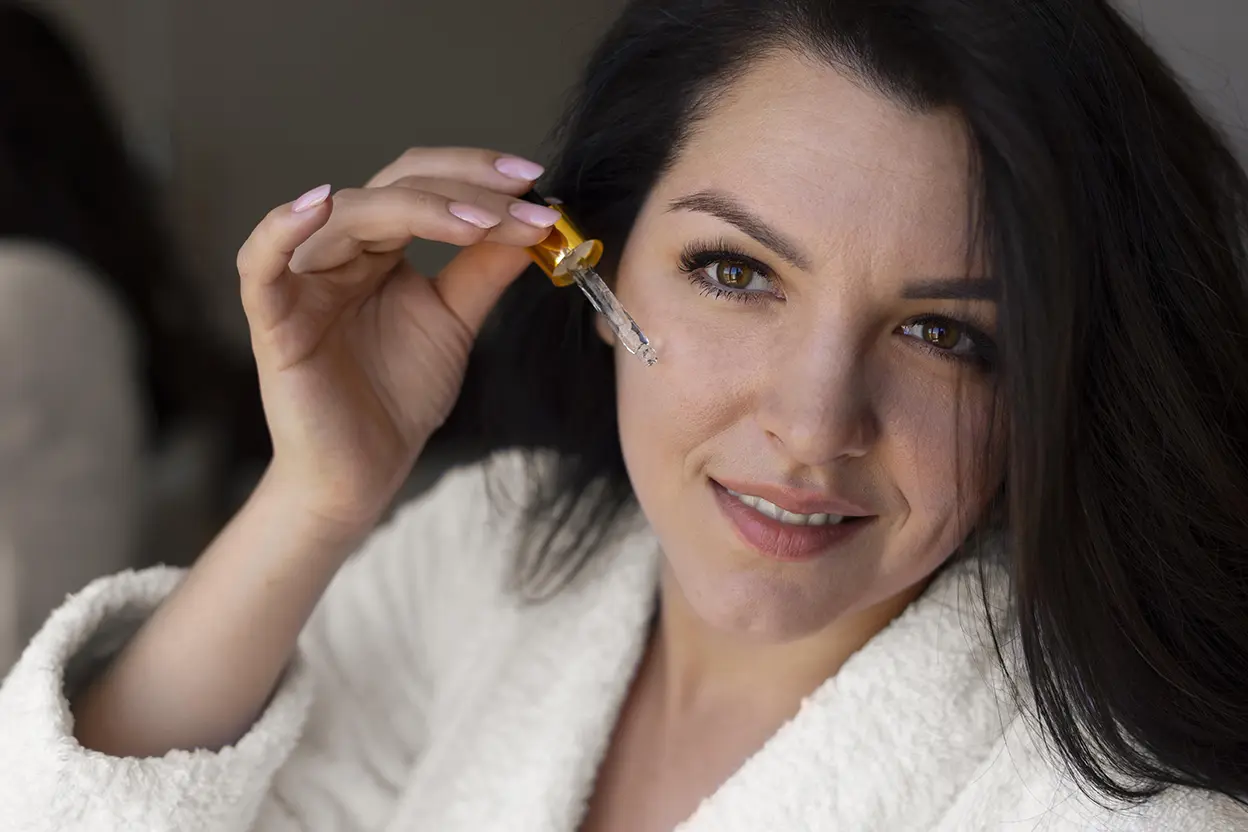
The most common cause of disappointment is improper application. If you apply a hyaluronic serum to completely dry skin and do not seal it with anything, in dry air, a feeling of tightness may appear. The basic rule is simple: a little moisture + cream on top. Step-by-step instructions — in the article "How to Apply Hyaluronic Acid Correctly: To Moisturize, Not Tighten".
Step by Step: Basic Morning/Evening Routine
Morning: cleansing → (optional toner/mist) → HA → cream → SPF.
Evening: cleansing → HA → cream or restorative product.
No need to apply too much: a few drops are enough. If the product rolls under SPF, reduce the amount and let the layer "settle" for 30–60 seconds.
What to Combine With: Ceramides, Niacinamide, Squalane
- Ceramides and lipids support the barrier and help retain moisture.
- Niacinamide often pairs well with HA, but for sensitivity, choose milder formulas.
- Squalane and light emollients reduce discomfort, especially in winter.
Common Mistakes
- Applying HA to dry skin without cream on top.
- Excessive amount of product.
- Aggressive cleansing that disrupts the barrier.
- Expecting filler effect from a serum.
Injection Techniques with HA: What's What
In cosmetology, hyaluronic acid is used not only in home care but also in injection procedures. They have different tasks and safety rules, so it is important to clearly understand the difference. Comparison "cosmetics vs injections" — in the material "Cosmetics or Injections with Hyaluronic Acid: What to Choose and for What Tasks".

Biorevitalization/Skin Boosters — About Skin Quality
These techniques are most often aimed at improving hydration, texture, and overall skin appearance. The result depends on the drug, technique, skin condition, and individual characteristics.
Fillers — About Volume and Contours
Fillers create or restore volume, correct contours and proportions. They differ in density and purpose, so it is important that the selection is made by a qualified specialist, and expectations are realistic.
Risks, Contraindications, "Red Flags"
After injections, swelling, bruising, sensitivity are possible — these are common reactions. But there are symptoms that require immediate medical attention: sharp pain, pallor or "marbling" of the skin, vision impairment, severe deterioration of well-being. That is why the choice of specialist and safety protocols is key. More details — in the guide on filler safety.
Who Needs Caution (and When It's Better to Consult a Doctor)
HA is usually well tolerated, but with active inflammation, dermatitis, rosacea flare-ups, or severely irritated skin, it is better to choose simple formulas without fragrances and potential irritants, and introduce new products gradually.
HA with Acne
With acne, HA can be beneficial as a barrier support, especially if you use actives that dry the skin. It is important to choose light, non-comedogenic textures. Separate material: "Hyaluronic Acid with Acne: Can It Be Used, and How Not to Worsen Skin Condition".
HA After Peels/Laser/Retinoids
After procedures, the skin may be more vulnerable. During this period, minimalist products, gentle cleansing, barrier creams, and careful reintroduction of actives work best. Separate material: "Hyaluronic Acid After Peels and Laser: When Can It Be Used and How to Restore the Barrier".
How to Choose a Product or Procedure for Your Task
Start by answering the question: what problem do you want to solve? If the main goal is comfort, hydration, dehydration — often competent home care is enough. If the task is to change contours or volume — this is about injection solutions, where consultation and anatomy assessment are needed.
How to Read the Label
Look for Hyaluronic Acid or Sodium Hyaluronate in the composition. But important are not only these words but also the base: if the formula contains many irritants, it can cause discomfort. If the formula has barrier components, hydration will be "more stable."
Choosing a Specialist for Injections
Choose a specialist with medical education, a clear approach to safety, and a consultation where you are explained the plan, risks, care, and alternatives. A good consultation is not "selling injections," but honest selection for the task.
Myths About Hyaluronic Acid
- "Hyaluronic acid dries the skin." Most often, this is not "drying," but improper application: HA works better on slightly damp skin and needs a cream on top, especially in dry air.
- "The higher the percentage of HA, the better the result." The effect is determined not by the percentage, but by the overall formula: base, moisturizing components, film formers, and barrier lipids.
- "HA serum replaces injections." HA cosmetics are about surface hydration and comfort, while injection techniques work on a different level.
- "Hyaluronic is suitable for everyone and always." For most — yes, but with active inflammation or after aggressive procedures, caution and minimalist formulas are needed.
- "Filler and biorevitalization are the same." No: fillers are about volume and contours, biorevitalization/skin boosters are more often about skin quality and hydration.
FAQ: Short Answers to Popular Queries
- 1) What is hyaluronic acid and why does the skin need it?
- It is a natural substance that binds water. In care, it helps moisturize the skin and maintain comfort.
- 2) Is hyaluronic acid and sodium hyaluronate the same thing?
- Sodium hyaluronate is a form of hyaluronic acid often used in cosmetics due to its stability and compatibility with aqueous formulas.
- 3) Low molecular or high molecular: which to choose?
- High molecular often provides a surface moisturizing effect, low molecular offers a different sensory experience and may combine better in formulas. More details: molecular weight comparison.
- 4) Is it true that hyaluronic acid "dries" the skin?
- It can cause tightness if applied to dry skin and not sealed with cream, especially in dry air.
- 5) How to apply HA correctly: on wet or dry skin?
- Optimally — on slightly damp skin, then apply cream. Step-by-step: how to use HA.
- 6) What to "seal" hyaluronic on top with?
- With cream. In the morning, the final step is SPF.
- 7) Can HA be used with acne and comedones?
- Usually yes. Choose light textures and formulas without potentially comedogenic components. More details: HA with acne.
- 8) Is HA suitable for sensitive skin and with rosacea?
- Often yes, but simple formulas without fragrances are needed; during flare-ups, it is better to consult a doctor.
- 9) What to combine HA with: niacinamide, ceramides, retinoids, acids?
- With ceramides and barrier creams — very well. With retinoids/acids — possible, but it is important to monitor irritation and not overload the skin.
- 10) Is there a point in high percentages of HA in cosmetics?
- Not always. More important is how the product is formulated and whether it supports the barrier.
- 11) Which is better: cream or serum with HA?
- Serum provides a moisturizing layer, cream helps retain moisture. Often the best combination works.
- 12) How do biorevitalization, skin boosters, and fillers differ?
- Biorevitalization/skin boosters are more often about skin quality and hydration, fillers are about volume and contours. Comparison: cosmetics vs injections.
- 13) What are the risks of injections with hyaluronic acid?
- Swelling and bruising are possible. Less often — serious complications, so the specialist's experience and safety protocols are important.
- 14) How to choose a specialist before injections?
- Look for medical education, consultation with plan explanation, transparency about risks, sterility, and adequate expectations.
- 15) How long does the effect last?
- In cosmetics, the moisturizing effect requires regular use. Injection procedures can provide a longer-lasting result — depending on the technique, drug, and individual characteristics.
Related Materials
- How to Apply Hyaluronic Acid Correctly: To Moisturize, Not Tighten
- Low Molecular and High Molecular Hyaluronic Acid: What's the Difference
- Cosmetics or Injections with Hyaluronic Acid: What to Choose and for What Tasks
- Hyaluronic Acid-Based Fillers: Safety, Risks, and How to Reduce Them
- Hyaluronic Acid After Peels and Laser: When Can It Be Used and How to Restore the Barrier
- Hyaluronic Acid with Acne: Can It Be Used, and How Not to Worsen Skin Condition
- Hyaluronic Acid for Different Skin Types: Dry, Oily, Sensitive, Combination
- Myths About Hyaluronic Acid: What's True and What's Marketing