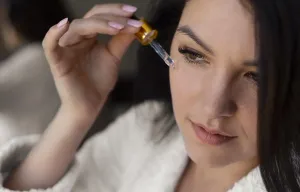






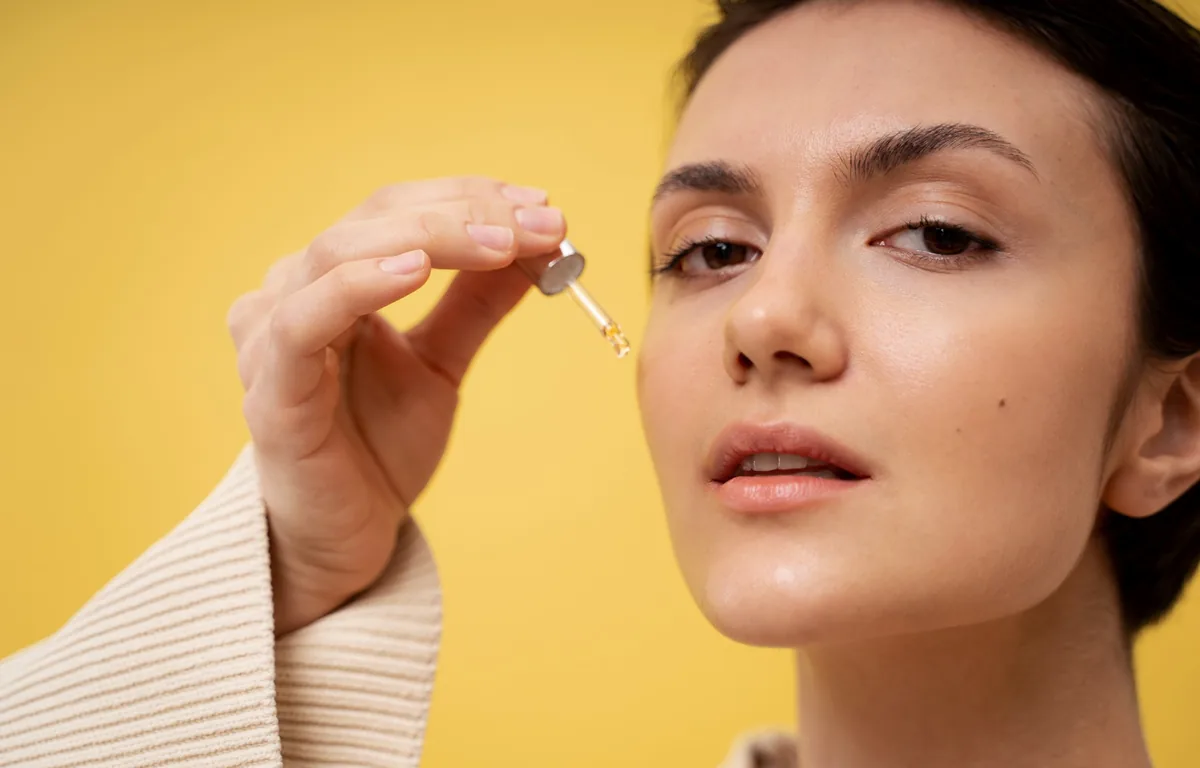
When dealing with acne, it's easy to fall into the trap of "the drier, the better." The logic is clear: less oiliness means fewer breakouts. However, in practice, overly dry skin often becomes more sensitive, flaky, and irritated, leading to a tendency for harsher cleansing or chaotic layering of products. Hyaluronic acid (HA) doesn't treat acne, but it often helps make the treatment more comfortable - without tightness and the constant feeling of "I need to apply something."
If you need a basic understanding of HA, its forms, and the difference between cosmetics and procedures, check out the main cluster material: Hyaluronic acid: a complete guide for skin, procedures, and safe use.
Can you use hyaluronic acid for acne - a short answer
In most cases - yes. If you're using acids, retinoids, or benzoyl peroxide, your skin often becomes dehydrated even when it appears shiny. In such a state, HA can be that gentle layer that reduces discomfort and helps you stick to the treatment without giving up due to dryness.
An important detail: if you experience breakouts after using an HA product, it's almost never the hyaluronic acid itself, but the base of the formula - dense emollients, occlusives, fragrances, or simply too many layers in your routine. For proper application without tightness, see the separate guide: How to properly apply hyaluronic acid: for hydration without tightness.
HA doesn't treat acne but supports the barrier
Imagine acne treatment as the main "engine" and hydration as the lubricant, without which everything starts to creak. HA doesn't directly reduce inflammation, but it helps the skin feel calmer: less tightness, less flaking, and easier tolerance of actives.
When HA can worsen the feeling
The two most common scenarios: applying serum on dry skin without sealing it with a cream, or the product feels sticky and pills due to a polymer base. Another issue can be fragrances or alcohols, which can feel irritating on inflamed skin.
Quick scenarios: what to do in your specific case
- Acne + dried out by retinoid. Reduce the frequency of retinoid use for 1-2 weeks, add a thin layer of HA, and definitely use a barrier-supporting cream. Stabilize the condition, then return to the active schedule.
- Acne + everything pills under SPF. Halve the amount of HA, take 30-60 second pauses, try a different SPF or another HA formula. Often the issue is the combination of polymers.
- Acne + skin reacts and reddens. Temporarily remove fragrances and unnecessary actives, keep a minimalist HA and a simple cream. If burning persists, it's better to consult a dermatologist.
How HA works for acne: barrier, dehydration, and sensitivity
Acne-prone skin often lives in a state of "both shiny and tight." It seems illogical, but it happens when there's oiliness but a lack of water in the stratum corneum. During treatment, this feeling intensifies: the skin can be oily in the T-zone but dry around the mouth or on the cheeks.
Why acne-prone skin is often dehydrated
- Actives reduce oiliness but can weaken the barrier.
- Cleansing "to the squeak" washes away lipids and enhances moisture loss.
- Dry air in winter or air conditioning in summer makes tightness more noticeable.
Proper hydration improves treatment tolerance
When the skin is more comfortable, you're less likely to change your routine in panic and less likely to "overload" on actives to quickly clear breakouts. Stability is one of the most boring but effective aspects of acne care.
Which textures are better: gels, fluids, serums
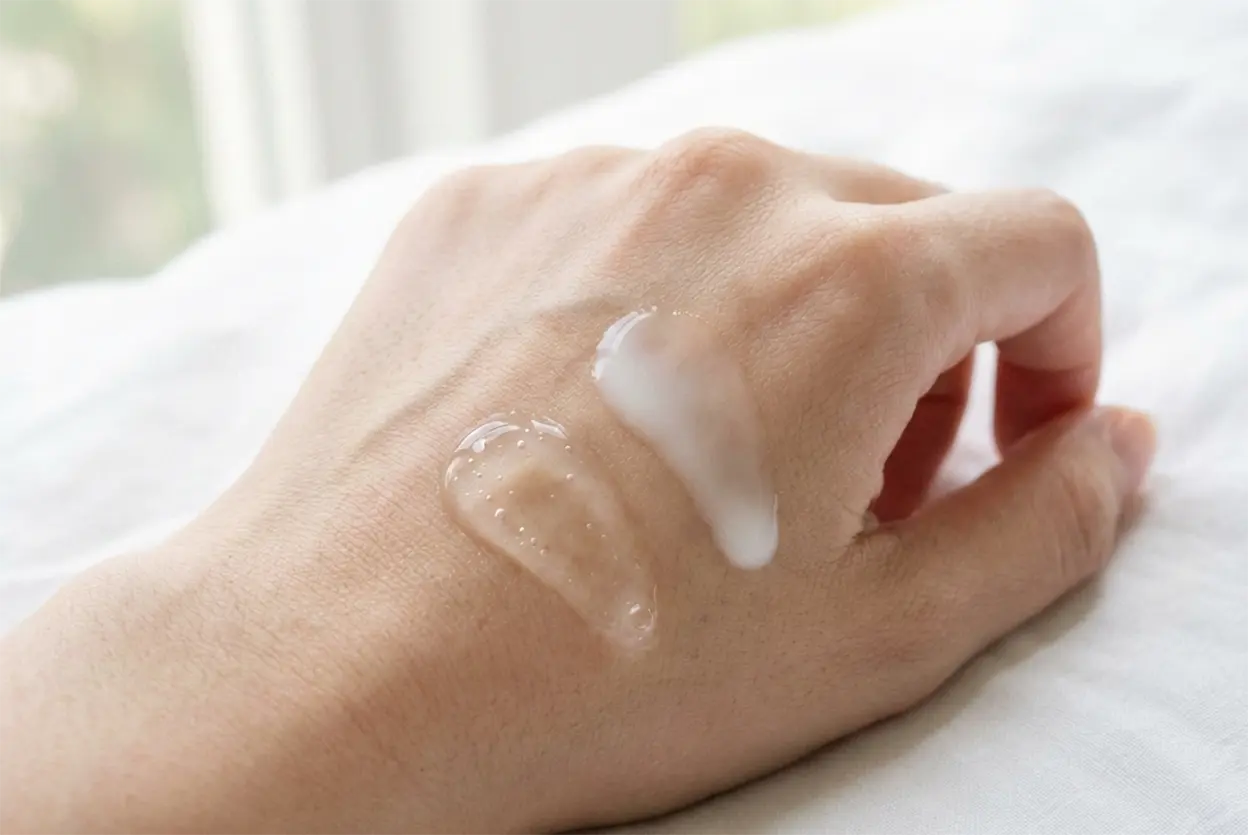
For acne, lightweight formulas often win: they absorb quickly and don't create a feeling of "extra layer." If treatment has dried out your skin, an HA serum can be a good intermediate step, but it's better to see it as a supportive layer rather than a cream replacement.
For oily or combination skin: light water-based formulas
Look for gel or water-based serums, fluids, thin emulsions. If a product promises "quick absorption" and "no film," it's often a good direction. Apply a thin layer and check how it behaves under SPF - it's the most honest test.
For dry skin during treatment: HA + barrier cream
If it's burning and flaking, the combination works: a thin layer of HA + a barrier-supporting cream (emollients, ceramides). In such a situation, "more HA" rarely solves the problem; a proper cream often helps more. For more on choosing for skin types, see the material: Hyaluronic acid for different skin types: dry, oily, sensitive, combination.
When to avoid heavy occlusives
If you easily get comedones, dense balms all over the face may be unnecessary, especially in the heat. Better - a light cream in a thin layer or locally on dry areas (around the mouth, nose wings).
How to choose a texture in 30 seconds
- Looking for lightness. Choose "gel," "fluid," "light emulsion," "water-based," and avoid very thick balms for the whole face.
- Checking layering. If you always use SPF, opt for products that absorb quickly and plan pauses between layers.
- Paying attention to feel. If a product feels sticky right away, start with half the usual dose. If stickiness persists, it's a feature of the base, better to change the product.
What to look for in the composition to avoid clogging pores
Comedogenicity is not absolute, but with acne, it's important to look at the formula as a whole. If you suspect that a new "HA" worsens the condition, the reason is usually in the base: dense emollients, oils, fragrances, or too many layers in care.
Potentially problematic components - with caution
- Very dense occlusives in high amounts if the skin clogs easily.
- Strong fragrances and essential oils with inflammation and sensitivity.
- High content of denatured alcohol if there's already dryness and irritation.
How it looks on the label
No need to memorize INCI. Just notice three things: is there a strong fragrance, are there many "heavy" textural components, and does the product dry you out. Focus on your skin's reaction and context (summer, heating, actives).
Beneficial pairs: HA + niacinamide, ceramides, panthenol
Niacinamide often reduces reactivity, ceramides help retain moisture, panthenol adds comfort when the skin is irritated. If you're curious why some HA products create a "film" and others don't, see the material on molecular weight: Low molecular weight and high molecular weight hyaluronic acid: what's the difference.
How to properly use HA for acne
Basic morning routine
Cleansing - a thin layer of HA - light cream if needed - SPF. If the product feels sticky, start with half the usual amount. If it pills under SPF, take a 30-60 second pause and try a thinner layer of cream or a different SPF.
Evening during treatment: where HA fits
HA can be a "comfort cushion." The most typical scheme: active - HA - cream. If the skin is very sensitive, sometimes it's better to separate actives and rich hydration on different days. For post-procedure scenarios, refer to the separate material: Hyaluronic acid after peels and laser: when to use and how to restore the barrier.
How to avoid stickiness and pilling
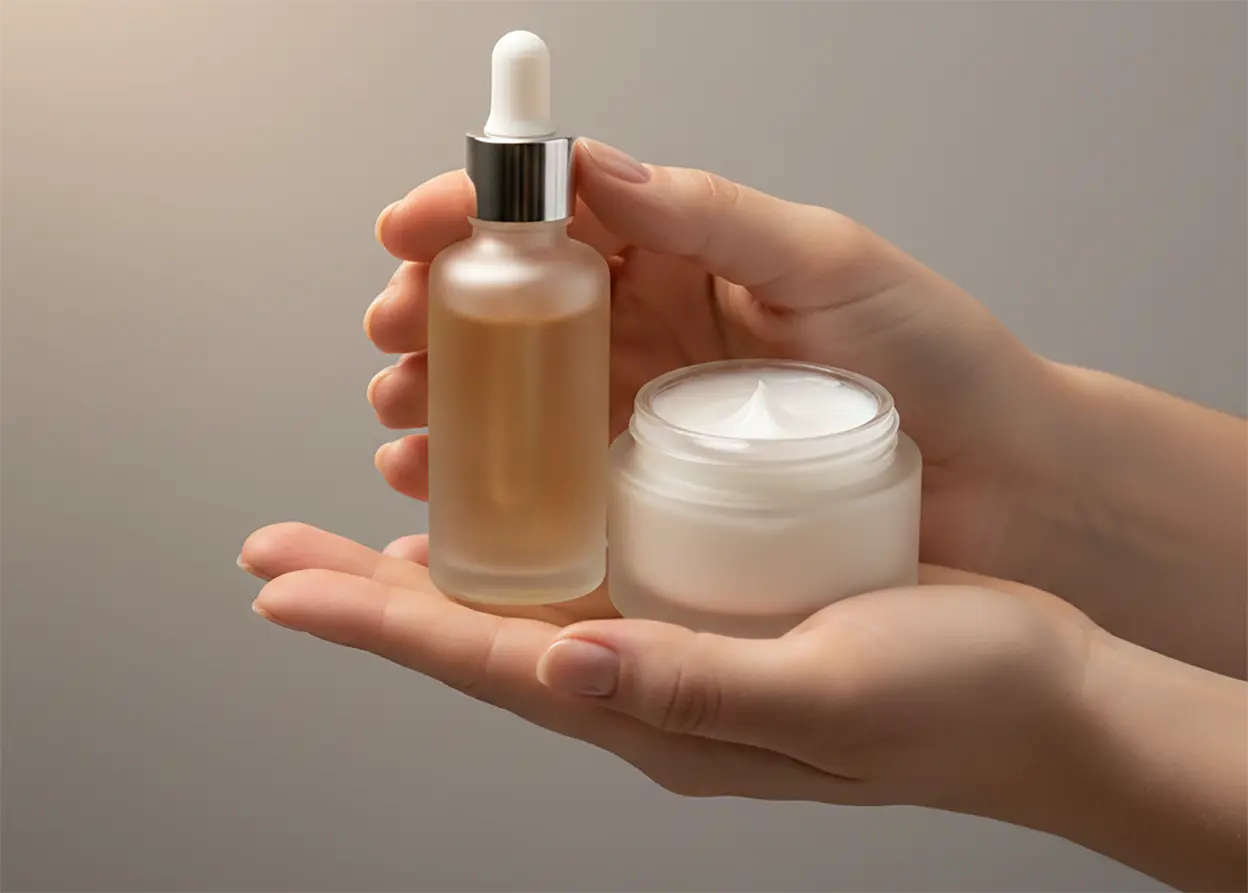
- Less product - a thin layer almost always works better.
- Pause between layers for 30-60 seconds.
- If SPF pills, try a different SPF or another HA formula.
- Avoid layering too many polymer-based products in one morning.
Table: problem - probable cause - what to change first
| Problem | Probable cause | What to change first |
|---|---|---|
| Tightness | Applied on dry skin, no cream on top, dry air | Apply on slightly damp skin + cream; review cleansing |
| Stickiness | Too much product or film-formers in the formula | Halve the amount; if it persists - change the formula or leave for evening |
| Pilling under SPF | Too many layers, polymer conflict | Pause for 30-60 seconds, thinner layers; test another SPF |
| Seems to "clog pores" | Dense base, heavy textures, excess occlusives | Switch to gel/fluid; leave denser products locally on dry areas |
| Burning or redness | Reaction to fragrances, alcohols, or overload of actives | Remove suspicious product, leave a minimalist base; if it persists - consult a dermatologist |
Mini-protocol for 7 days: how to add HA without unnecessary risks
- Days 1-2: morning - cleansing, thin layer of HA, cream, SPF. Evening - only basic cream. Assess comfort and behavior under SPF.
- Days 3-4: if all is well, add HA in the evening before the cream. If there's tightness, increase the role of the cream, not the amount of HA.
- Days 5-7: if using actives, try "active - HA - cream" 2-3 times a week. If burning occurs, reduce the frequency of the active and return to the basic scheme.
Common mistakes and quick solutions
"Broke out from HA" - how to understand what's to blame
Stop the new product for 5-7 days and return to the basic routine. Then reintroduce it every other day, in a thin layer. If the reaction repeats, it's likely the base of the formula, not HA as an ingredient.
Checklist: seems like a reaction to the formula, not HA
- Burns or reddens immediately after application, even in minimal amounts.
- Itches or spots appear exactly where the product was applied.
- The reaction repeats upon reintroduction after a few days.
- The condition worsens when you add another fragranced product nearby.
Burning or redness: when to stop
If there's burning, persistent redness, or swelling, stop the new product and stick to a minimalist routine: gentle cleansing, simple cream, SPF. If symptoms don't subside or worsen, consult a dermatologist.
When HA should be temporarily removed
If the skin "burns" from any product or there's suspicion of dermatitis, temporarily stick to the basics: gentle cleansing, simple barrier cream, SPF. HA can be reintroduced after stabilization.
Not seeing an effect: what expectations are realistic
A realistic effect of HA for acne is less tightness and better treatment tolerance. It doesn't replace anti-inflammatory agents and doesn't provide "clear skin in a week."
When a dermatologist is needed
- Moderate to severe acne, painful nodules, multiple inflammatory elements.
- Rapid scar formation or pronounced post-inflammatory pigmentation.
- Suspicion of contact dermatitis or strong reaction to care.
- Acne that doesn't respond to basic approaches within 8-12 weeks.
FAQ
Can you use HA with comedones?
Usually, yes. Choose light gels or fluids and avoid dense occlusive textures all over the face.
Can you use HA with inflammatory elements?
Yes, if there's no irritation from the formula. HA can reduce discomfort from dryness but doesn't replace anti-inflammatory treatment.
Can you use HA with benzoyl peroxide?
Usually, yes. Often, HA and cream help reduce dryness associated with benzoyl. It's important not to overload the routine with layers.
Can you use HA with retinoids?
Yes. Most often - retinoid, then HA, then cream. If there's strong irritation, reduce the frequency of retinoid use and simplify the routine.
Which form of HA is better for acne?
The name of the form is less important than the texture and base. If you're concerned about "film" or pilling, pay attention to the material on molecular weight: Low molecular weight and high molecular weight hyaluronic acid: what's the difference. For common myths - here: Myths about hyaluronic acid: what's true and what's marketing.
Conclusion in 4 lines
HA can usually be used for acne if you choose a light texture and avoid too many layers. Apply HA on slightly damp skin and seal with a cream. If breakouts occur, the formula's base is often to blame, not HA. For painful or persistent acne, it's better to involve a dermatologist.