





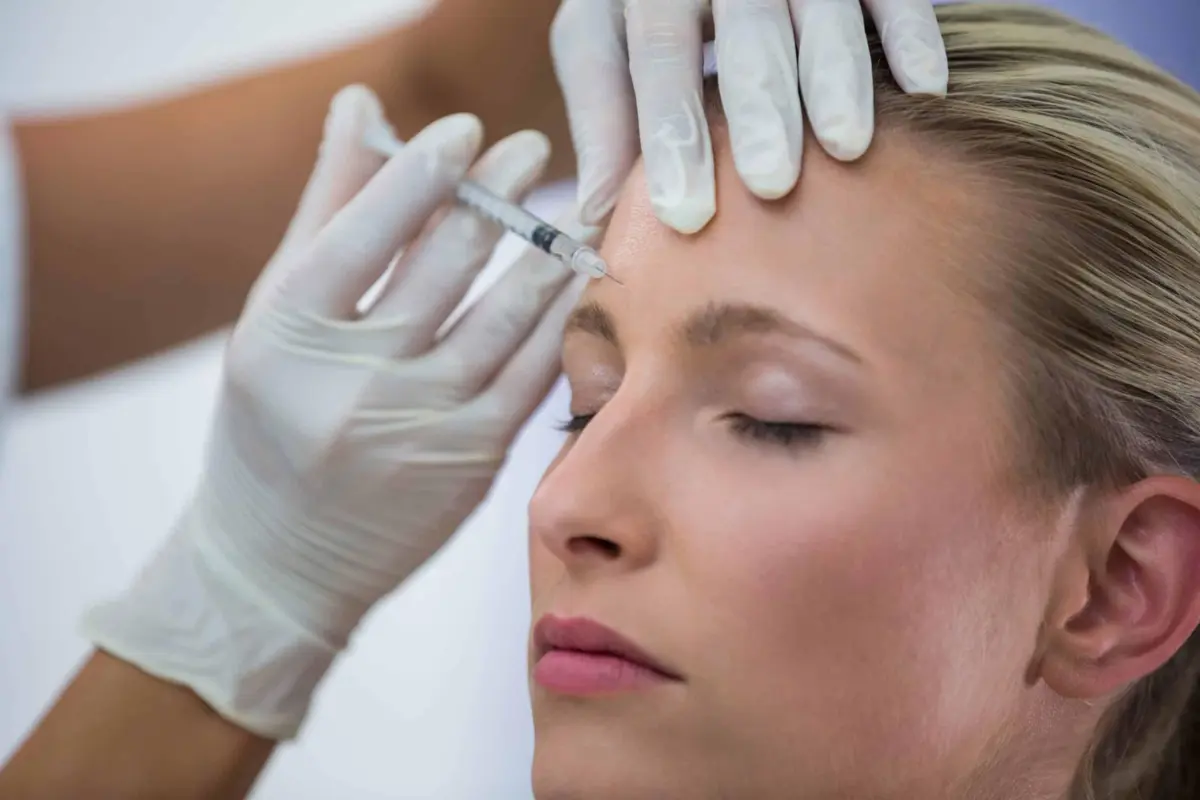
In everyday speech, “Botox” is often used to refer to injections of various botulinum toxin products. In fact, Botox is the trade name of a specific product, onabotulinumtoxinA, while botulinum therapy is the method in which botulinum toxins are used. In aesthetic medicine, botulinum toxin type A products are of primary importance.
Their target is not the wrinkle itself, but neuromuscular transmission. The product temporarily reduces the activity of a selected muscle, so the most predictable result is achieved where the changes are directly related to facial expression. Volume loss, tissue sagging, photodamage, or a deep static fold have different mechanisms and cannot be corrected by muscle weakening alone.
When planning botulinum therapy, what matters is not how many wrinkles need to be removed. What matters is the reason they appeared, how the muscles work at rest and in motion, the position of the brows and eyelids, baseline asymmetry, anatomical features, and how strong a correction a particular person needs.
In this article, we repeatedly refer to data on BOTOX Cosmetic (onabotulinumtoxinA), since detailed public clinical and regulatory documentation is available for this product. The U.S. FDA prescribing information provides clinical trial data for specific aesthetic areas, registered injection protocols, dosages, and the frequency of adverse reactions. Therefore, BOTOX Cosmetic is used here as a well-documented example, not as a standard for all botulinum toxin products. Its doses, units, and protocols cannot be automatically transferred to other products.
How botulinum toxin works
For a skeletal muscle to contract, the nerve ending must release acetylcholine at the neuromuscular junction. Botulinum toxin type A interrupts this exact step of signal transmission: inside the presynaptic nerve ending, it cleaves the SNAP-25 protein, which is necessary for the release of acetylcholine. As a result, a weaker signal reaches the muscle fibers, and the muscle contracts less actively.
This effect is called local partial chemical denervation. It is not mechanical “immobilization” of the muscle and not its permanent removal from function. Neuromuscular transmission is gradually restored, so the effect of botulinum toxin is time-limited.
On the face, the result also depends on the balance of forces between different muscles, which may act in opposite directions. The position of the brows and the pattern of facial expression depend on this balance. The frontalis raises the brows. The corrugator supercilii pulls their medial part downward and toward the center, the procerus pulls the medial brow area downward, and the orbicularis oculi contributes to brow depression, especially its lateral part. At the same time, contraction of these muscles forms characteristic expression lines: horizontal lines on the forehead, vertical lines in the glabellar area, and lateral wrinkles around the eyes.
Weakening one muscle can change the wrinkles above it and at the same time alter the balance of the entire system. This is especially clear in the case of the frontalis. In some people, it works actively even in their usual facial expression: the person unconsciously raises the brows, for example to compensate for their low position or hooding of the upper eyelid tissues. If the frontalis is weakened too much in such a situation, the brows may descend and the upper face may appear heavier. This is not the same as true upper eyelid ptosis: what changes primarily is the position of the brow and the tissues above it.
In another person, the brows at rest may not depend so much on constant frontalis activity, and the muscle itself may engage actively mainly when they raise their brows. In that case, a moderate reduction in its activity may primarily decrease the range of motion and the severity of horizontal lines, while the change in brow position at rest will be less noticeable. Forehead height, brow shape and initial position, the distribution of activity within the frontalis itself, and the strength of the muscles that pull the brows downward also matter. That is why the same “forehead protocol” can produce different results in different people.
This interaction is also taken into account in standardized treatment protocols. In the U.S. prescribing information for BOTOX Cosmetic, horizontal forehead lines are recommended to be treated together with the glabellar area to reduce the risk of brow ptosis. Anatomically, this protocol accounts for the opposing actions of the muscles: when weakening the frontalis, which raises the brow, the activity of some glabellar muscles that pull it downward is reduced at the same time. When selecting injection points, the prescribing information also requires taking forehead size and the distribution of frontalis activity into account. This is a clear example of why the result of botulinum therapy is determined by the functional anatomy of a particular face, not by the dose of the product alone.
What can and cannot be corrected with botulinum toxin
The main purpose of botulinum therapy is the correction of dynamic wrinkles, which appear or become significantly more noticeable during frowning, raising the brows, squinting, or smiling. If the strength of the corresponding contraction is reduced, the skin over the muscle folds less.
With static lines, the situation is more complex. If a wrinkle remains visible at rest, it is sustained by repeated muscle movement and changes in the skin itself. Reducing repeated folding can make the line less pronounced, but a deep static wrinkle is not necessarily expected to disappear even after well-performed botulinum therapy.
- Glabellar area. The main targets are the corrugator supercilii and the procerus. Weakening their activity reduces the severity of lines during frowning. If the glabellar fold is deeply etched into the skin and clearly visible without facial movement, the result may be incomplete.
- Forehead. Horizontal lines are primarily related to frontalis activity. But this same muscle raises the brows, so here it is especially important to assess their baseline position and understand whether the person uses the frontalis for constant compensatory brow elevation.
- Lateral area around the eyes. “Crow’s feet” are associated with activity of the lateral part of the orbicularis oculi during squinting and smiling. Botulinum toxin affects the muscular component of these lines, but it does not eliminate photodamage, loss of elasticity, or all the fine wrinkles of the skin around the eyes.
- Platysma. Its contraction can form vertical neck bands and affect the contour of the lower jaw. Since 2024, correction of moderate and severe platysmal bands has been included among the registered aesthetic indications for BOTOX Cosmetic in the United States.
- Other areas. In practice, botulinum toxin is also used for selected concerns in the lower third of the face, the chin area, around the mouth, in the masticatory muscles, and in other muscle groups. But the regulatory status of a specific technique depends on the product and the country, and some common aesthetic uses remain off-label.
There are also fundamentally different types of age-related change. Botulinum toxin does not restore lost volume, does not create structural support, does not move fat compartments back to their original position, and does not restore the quality of the dermal matrix. Therefore, a hollow, fold, or contour change may look similar but require different approaches depending on the cause.
The question “which is better — Botox or filler” is itself incorrect. Botulinum toxin changes muscle activity, whereas fillers are used to address volume and structural tissue support.
The strength of the effect is also planned individually. A completely smooth forehead and maximally restricted facial expression are not universal criteria for a successful procedure. A change in muscle function can affect brow position, symmetry, and facial expression. Therefore, the result should be evaluated together with the baseline anatomy, proportions, and preservation of natural facial expression. We discussed this approach in more detail in our article on a natural result in aesthetic medicine.
How the procedure is planned and when the result is assessed
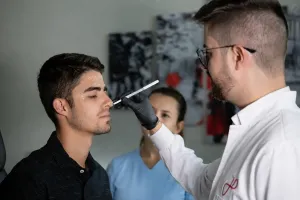
Before injections, the face is assessed both at rest and during active facial expression. In addition to the location of wrinkles, the doctor looks at how the person frowns, raises the brows, squints, and smiles, whether the right and left halves of the face work equally, what the brow position is at rest, and how actively the muscles engage in movement.
Baseline asymmetry is important to document before the procedure. Botulinum toxin can change it, but the mere presence of asymmetry after injections does not by itself mean that it was caused by the procedure. Likewise, before injection, brow position and the extent to which it depends on constant frontalis activity are assessed.
The specific product also matters. The biological activity units of BOTOX Cosmetic are specific to that product and its assay method and cannot be directly converted into the units of another botulinum toxin. Similar warnings are included in the prescribing information of other products. Therefore, the phrase “I was injected with 30 units” without the product name, area, and treatment protocol provides very little information about the actual strength of correction. More on this in the article on Botox, Dysport, and Xeomin: how the products differ and why their units cannot be compared.
The effect does not develop instantly. Initial chemical denervation after injection into the glabellar area occurs approximately within one to two days and increases during the first week. For this same indication, the duration of effect is approximately three to four months.
One should not conclude “Botox resistance” solely from a weak result. It is influenced by the product, dose, chosen target, muscle activity, technique, and timing of assessment. Neutralizing antibodies to botulinum toxin are possible, but this is a separate issue and not a universal explanation for an unsuccessful or short-lived effect. We will discuss it in the article When Botox starts working, how long it lasts, and why the effect may be weak.
After the procedure, patients are often given long lists of restrictions: not to lie down, exercise, drink alcohol, visit a sauna, have a massage or undergo cosmetic procedures. However, these recommendations are not equally well supported by evidence. Some precautions are reasonable in specific clinical situations, while others are based largely on tradition. The doctor’s individual instructions should therefore take priority over universal lists of “what not to do after Botox.”
Safety: expected reactions, contraindications, and complications
Botulinum therapy is a medical injection procedure. Pain or tenderness at the puncture site, slight swelling, redness, or bruising are primarily related to the injection itself. They must be distinguished from an undesirable pharmacological effect, when the target muscle is weakened too much or the effect involves neighboring structures.
For the upper third of the face, clinically significant local problems may include upper eyelid or brow ptosis, undesirable changes in their position, and asymmetry. The risk depends on anatomy, baseline facial expression, area, dose, injection points, and spread of the product’s effect.
Figures from clinical trials help to understand the scale of risk, but they must be read correctly. In the BOTOX Cosmetic studies included in the U.S. prescribing information, during treatment of glabellar lines, upper eyelid ptosis was reported in 3% of participants who received the product. In studies of forehead treatment together with the glabellar area, headache was noted in 9%, eyelid ptosis in 2%, and brow ptosis in 2%. During treatment of lateral wrinkles around the eyes, eyelid edema was reported in approximately 1% of cases. We will discuss these situations in more detail in the article on complications after Botox: ptosis, asymmetry, “heavy brows,” and other adverse reactions.
Contraindications and situations requiring special caution are different categories. In the U.S. prescribing information for BOTOX Cosmetic, contraindications include known hypersensitivity to botulinum toxin or the components of the product, and infection at the planned injection site. Neuromuscular disorders, swallowing or breathing problems, and medications capable of affecting neuromuscular transmission require separate evaluation. The prescribing information specifically mentions aminoglycosides and other agents that may interfere with neuromuscular transmission, as well as muscle relaxants. Therefore, the popular formula “Botox cannot be used with antibiotics” is inaccurate: antibiotics are a large group, and what matters is the specific drug and the clinical situation.
For pregnancy, there are insufficient human data to assess the risk of BOTOX Cosmetic. For breastfeeding, the prescribing information also notes the absence of data on whether the product passes into milk, its effect on the child, and its effect on milk production. This is not evidence of harm, but neither is it a basis to consider use proven safe.
For botulinum toxins, there is a class warning about the possibility of spread of effect beyond the injection site. Among the described symptoms are generalized muscle weakness, double vision, ptosis, swallowing difficulties, speech problems, and breathing difficulties. Such symptoms may occur hours or weeks after injection; swallowing or breathing difficulties require urgent medical attention.
The possibilities of botulinum therapy are determined not by the mere presence of a wrinkle, but by its mechanism. When the main cause is excessive or undesirable muscle activity, botulinum toxin makes it possible to reduce it in a targeted way. When the problem is primarily related to skin structure, volume loss, or tissue position, the possibilities of the method are fundamentally limited.
Sources
- U.S. Food and Drug Administration. BOTOX Cosmetic (onabotulinumtoxinA) for injection: Full Prescribing Information. Revised October 2024.
- Schiavo G, Santucci A, DasGupta BR, et al. Botulinum neurotoxins serotypes A and E cleave SNAP-25 at distinct COOH-terminal peptide bonds. FEBS Lett. 1993;335(1):99-103.
- Sundaram H, Signorini M, Liew S, et al. Global Aesthetics Consensus: Botulinum Toxin Type A—Evidence-Based Review, Emerging Concepts, and Consensus Recommendations for Aesthetic Use, Including Updates on Complications. Plast Reconstr Surg. 2016;137(3):518e-529e.
- Bertucci V, Carruthers JD, Sherman DD, et al. Integrative Assessment for Optimizing Aesthetic Outcomes When Treating Glabellar Lines With Botulinum Toxin Type A: An Appreciation of the Role of the Frontalis. Aesthet Surg J. 2023;43(Suppl 1):S19-S31.
- Kwon IJ, Lee W, Moon HJ, Lee SE. Dynamic Evaluation of Skin Displacement by the Frontalis Muscle Contraction Using Three-Dimensional Skin Displacement Vector Analysis. Yonsei Med J. 2023;64(7):440-447.
- Jankovic J, Carruthers J, Naumann M, et al. Neutralizing Antibody Formation with OnabotulinumtoxinA (BOTOX) Treatment from Global Registration Studies across Multiple Indications: A Meta-Analysis. Toxins. 2023;15(5):342.