







In today’s cosmetology space, the demand for simple answers is becoming increasingly dominant. Procedures are described through the expected effect, actives - through promises, protocols - through a list of steps. This approach is convenient for communication, but it poorly reflects the reality of working with skin as a living biological system.
Cosmetology deals not with isolated parameters, but with adaptive tissue embedded in a complex physiological context. That is why a gap often appears between an intervention and its outcome - not because the method “failed”, but because of the nature of the object we work with.
This material captures the key reasons cosmetology cannot be simplified without losing meaning, and explains why professional thinking begins where universal answers end.
Why the demand for simple solutions in cosmetology inevitably leads to mistakes
The drive to simplify does not come from nowhere. It forms at the intersection of patient expectations, marketing messages, and the logic of digital systems, which find it easier to operate with linear links: method → effect.
However, cosmetology does not exist within a linear coordinate system. Here, an outcome is not a direct consequence of an intervention - it emerges as a tissue response that depends on many conditions.
In this context, simplification is not always untrue, but it is almost always an incomplete truth. The problem begins when this incomplete truth is used as the basis for clinical decisions.
Nonlinearity of biological systems: why stimulus and outcome do not match
Skin is not a passive substrate, but a dynamic, adaptive system. Its response to an intervention is determined not only by the intensity of the stimulus, but also by the current state of regulatory mechanisms.
Biological systems are well described by phenomena such as thresholds, saturation, and feedback. Increasing the intensity of an intervention does not guarantee a stronger result; in some cases it distorts the response or shifts the system into destabilization.
In cosmetology, a method does not “deliver” a result - tissue forms the result.
That is why procedures identical in parameters can produce fundamentally different effects.
This logic is explored in detail in the material Why results in cosmetology are not linear, where nonlinearity is examined as a basic property of cosmetology interventions.
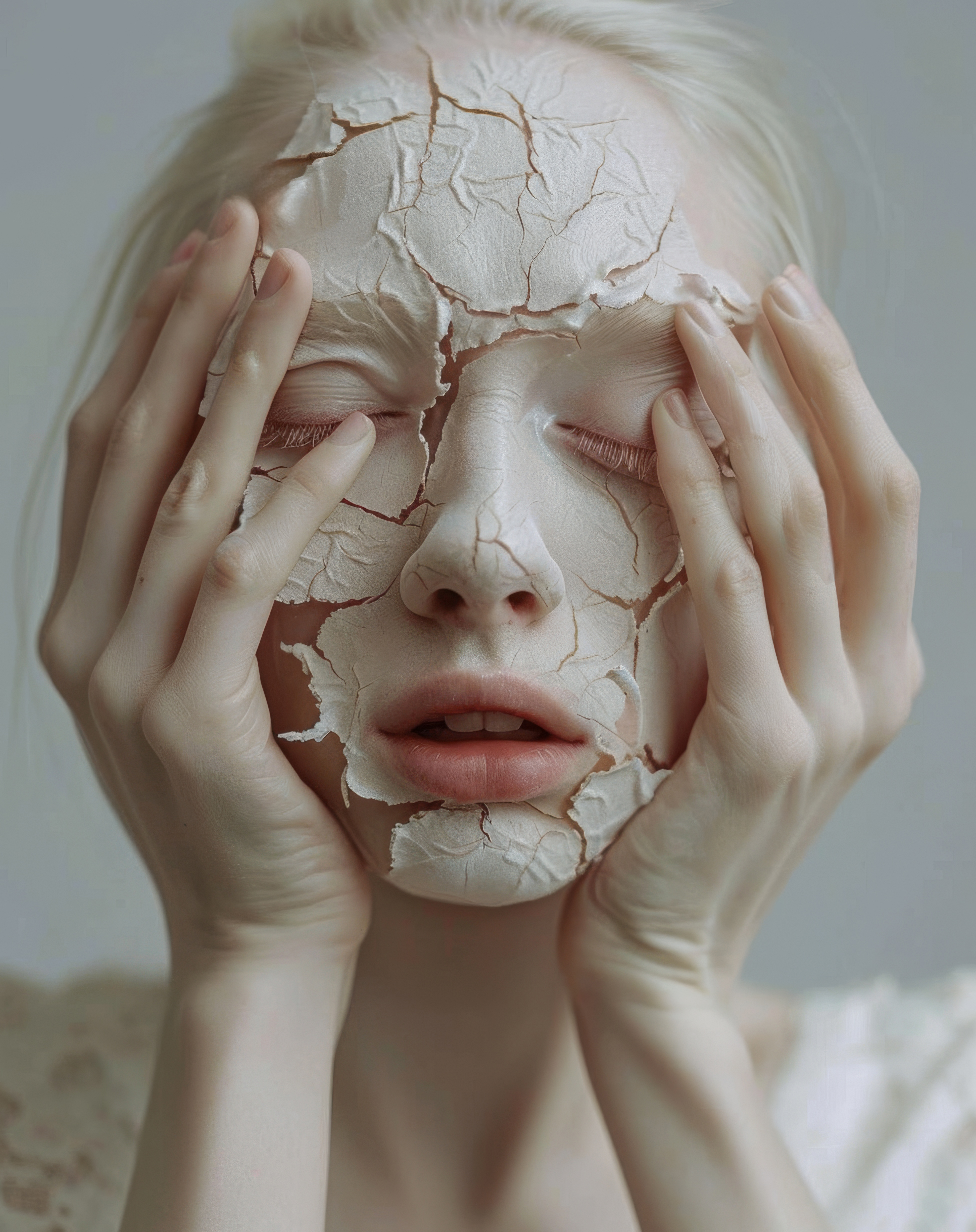
Variability as the norm: why the same methods produce different results
In clinical practice, variability is often perceived as a problem. In reality, it is a normal manifestation of working with living tissue.
The effectiveness of cosmetology interventions is influenced by:
- the baseline state of the skin barrier,
- the level of background inflammation,
- the history of prior procedures,
- age and regenerative resources,
- the impact of chronic stress and systemic factors.
Even with an identical protocol, skin responds not to the method itself, but to how it is integrated into a specific physiological context.
Effectiveness is not a property of the procedure - it is a characteristic of the skin’s response.
That is why outcome variability is not a deviation, but an expected feature of cosmetology practice.
This aspect is analyzed in detail in the material Factors behind variability in the effectiveness of cosmetology methods.
Clinical outcomes and visual improvement are not the same thing
One of the most common distortions in cosmetology is a substitution of concepts. Visual improvement - smoother texture, increased density, a more even tone - does not always reflect a true clinical improvement in skin condition.
A clinical outcome is primarily tied to functional stability: barrier integrity, an adequate inflammatory response, and the tissue’s ability to adapt to load. In some cases, pronounced visual improvement has a delayed “cost” that becomes visible only over time.
Distinguishing between these concepts is essential for a correct assessment of intervention effectiveness.
Limits of methods: why no approach is limitless
Every cosmetology method has physiological and tissue limits. These limits are not a flaw - they reflect the skin’s adaptive capacity. Attempts to “amplify” an effect by increasing intensity or frequency often do not improve the result, but push the system into a zone of instability.
Recognizing a method’s limits is a sign of professional thinking, not a limitation of it. A detailed analysis of this issue is presented in the material Limits of cosmetology methods: where and why the effect ends.
Why a protocol is not a guarantee of results
In cosmetology, a protocol is often perceived as a guarantee of results. If all steps are followed, parameters maintained, intervals correct - a predictable effect is expected. This is a logical expectation, but it rests on a false assumption: that a protocol can account for all variables of a biological system.
In its ideal form, a protocol is:
- a model of intervention built on scientific data;
- a generalization of clinical experience;
- a logical sequence of actions that minimizes risks.
An ideal protocol is the best available model - not a predictive instrument.
Even when a protocol is followed perfectly, the outcome is formed not by the algorithm of actions, but by the tissue response. This response depends on:
- the current state of the skin barrier;
- the level of subclinical inflammation;
- the tissues’ capacity for recovery;
- prior interventions that may have altered skin reactivity.
Thus, a protocol structures clinical thinking, but does not eliminate variability.
A protocol describes the logic of an intervention, but it does not control the biological response.
This is where the key professional task arises: not to follow a scheme blindly, but to continuously align it with the dynamics of the skin’s response.
How scientific research becomes simplified when translated into practice
One of the most illustrative examples of simplification is the transfer of data on collagen stimulation from laboratory and short-term clinical studies into real-world cosmetology practice.
Many studies demonstrate:
- increased expression of type I or type III collagen;
- fibroblast activation;
- morphological changes in the dermis over a short timeframe.
However, these results are often:
- obtained in vitro or in animal models;
- based on biopsies at a precisely defined time point;
- not accounting for long-term tissue adaptation.
In clinical practice, an increase in collagen synthesis does not always correlate with sustained improvements in skin quality. Without accounting for inflammation, matrix degradation, and barrier status, stimulation may lead to a temporary effect or even to further instability. This is a classic example of how a scientifically correct result turns into a simplified clinical expectation.
How AI and marketing reinforce the illusion of simplicity
Artificial intelligence has already become part of the cosmetology field. It is used for skin image analysis, classification of types and conditions, synthesis of scientific data, trend forecasting, and the generation of recommendations based on large volumes of information. In these tasks, AI is genuinely effective. It works well with recurring patterns, statistical regularities, and average values. That is why algorithmic systems can rapidly structure knowledge that would require far more time for a human to process.
At the same time, the way AI works defines its limitations. Algorithms learn from averaged data and reproduce the links that most often occur in training sets. As a result, complex, multifactorial processes are reduced to simplified models that perform well “on average” but poorly describe individual variation.
In cosmetology, this is especially pronounced. The skin’s biological response is not stable, repeatable, or predictable within a single algorithm. Yet AI is forced to generalize - and that is where the illusion of simplicity arises.
For example, statements such as “retinol accelerates skin renewal” or “energy activates collagen synthesis” are broadly correct in terms of average data. But such formulations remove the conditions: barrier status, inflammatory background, adaptive resources of the tissue, prior interventions, and the time horizon used to assess outcomes.
Marketing reinforces this effect by cementing a direct link between an ingredient, a method, or a technology and an expected result. AI, in turn, reproduces these simplified constructs because they dominate the accessible information sources.
The problem is not the existence of AI as a tool, but the fact that cosmetology, by its nature, requires conditional, contextual, and bounded answers. Where an algorithm is forced to provide a universal recommendation, professional practice requires clinical reasoning.
The Cosmet.info approach: working with complexity rather than hiding it
Cosmet.info is built on acknowledging the complexity of cosmetology as a professional reality. The focus is not promises, but mechanisms; not universal schemes, but conditions of effectiveness; not visual effects, but clinical logic. Nonlinearity, variability, and limits are treated not as problems, but as foundational categories of professional thinking. This approach allows for resilient clinical decisions and a correct interpretation of both practical experience and scientific data.
Conclusion
Cosmetology resists simplification not because it is insufficiently studied, but because it works with living, adaptive systems.
Accepting this complexity is not a rejection of effectiveness - it is the only path to professional resilience.
References
- Kitano H. Biological robustness. Nat Rev Genet. 2004;5(11):826–837.
- Ioannidis JPA. Why most published research findings are false. PLoS Med. 2005;2(8):e124.
- Quan T, Qin Z, Xia W, Shao Y, Voorhees JJ, Fisher GJ. Matrix-degrading metalloproteinases in photoaging. J Invest Dermatol. 2009;129(2):359–368.
- Varani J, Dame MK, Rittie L, Fligiel SE, Kang S, Fisher GJ, Voorhees JJ. Decreased collagen production in chronologically aged skin. Am J Pathol. 2006;168(6):1861–1868.
- Altman DG, Bland JM. Absence of evidence is not evidence of absence. BMJ. 1995;311(7003):485.