

LED masks have gradually moved from cosmetic clinics into home skincare routines. Manufacturers promise smoother skin, fewer breakouts, better firmness, and a more even complexion. Some devices cost less than a professional cosmetic procedure, while others are priced like sophisticated medical equipment. Let’s take a closer look at what LED masks are actually capable of, how light works in cosmetology, and where proven effectiveness ends and marketing begins.
Short answer: at-home LED masks really can reduce the appearance of fine wrinkles and the number of breakouts in mild to moderate acne. These effects are supported by randomized clinical trials and systematic reviews. Red and near-infrared light are the best studied for improving certain signs of skin aging, while blue and combined blue-red light are the best studied for acne treatment.
Results appear gradually, and the strength of the evidence varies depending on the concern and the device. It is important to distinguish between an LED mask whose effectiveness has been tested in clinical studies and a device whose advertising claims rely only on the general popularity of light therapy. The results of trials on one model cannot automatically be applied to others.
Do LED face masks really work?
In October 2026, the journal Aesthetic Plastic Surgery published a systematic review of eight studies involving 365 participants. Most of them examined the effects of red and near-infrared light. The results suggest that at-home LED therapy may reduce the appearance of wrinkles and improve skin texture and elasticity. However, the available data are still insufficient to determine the exact size of the effect. The studies involved relatively small groups of participants, and the treatment duration and device characteristics varied. In addition, most participants had lighter skin phototypes, making it more difficult to generalize the results to people with darker skin.
In a scientific review of at-home dermatology devices published in 2026, researchers also analyzed the effectiveness of LED therapy. They concluded that its use for reducing signs of skin aging has moderate evidentiary support. The authors similarly rated the evidence for blue light and its combination with red light for acne treatment. By contrast, the use of red light alone for breakouts remains less well studied.
So, LED therapy has a clinical rationale for addressing certain skin concerns, although the quality of the evidence remains moderate for now.
How LED therapy works: red, blue, and near-infrared light
An LED mask contains light-emitting diodes that produce light in specific wavelength ranges. Unlike lasers, which are usually designed to create a highly concentrated light effect, consumer LED masks illuminate relatively large areas of the face with lower-intensity light sources.
Different wavelengths are absorbed differently by skin structures and molecules. The result also depends on the amount of energy delivered, the duration of exposure, and the properties of the tissues the light reaches.
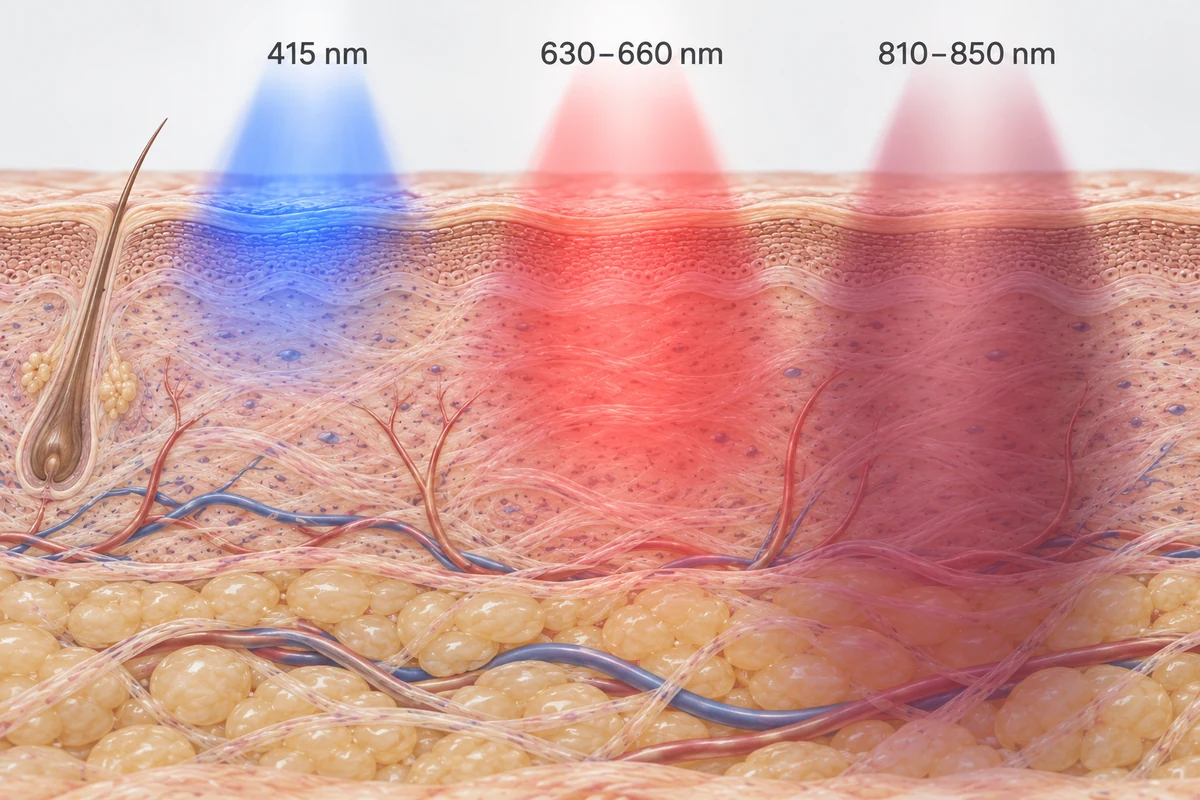
Fig. A schematic illustration of how light of different wavelengths spreads through the skin.
Red light and skin rejuvenation
Red light is used to improve skin texture and reduce fine wrinkles. Studies most often use wavelengths of 630–670 nm. Light in this range can influence processes that take place inside cells, particularly those related to energy production, inflammation, and tissue repair.
This type of effect is called photobiomodulation. One possible mechanism is linked to mitochondria, the structures that provide cells with energy. Researchers suggest that light may interact with the enzyme cytochrome c oxidase and alter the activity of cellular signaling systems. In particular, this involves processes related to nitric oxide and reactive oxygen species, which in small amounts are involved in regulating cellular activity.
Laboratory studies show that red light may influence collagen synthesis and breakdown. For example, a 2016 study compared the effects of yellow and red LED light on human skin fibroblasts. With irradiation at wavelengths of 595 ± 2 nm and 630 ± 8 nm, researchers observed increased type I collagen expression and reduced levels of matrix metalloproteinase MMP-1, an enzyme involved in collagen breakdown. This work also included experiments on mouse skin.
In another 2021 study, a combination of 640 nm red light and 830 nm near-infrared light increased collagen and elastin synthesis in fibroblast cultures and human skin samples. The light was applied daily for 10 minutes at a dose of 0.3 J/cm².
Laboratory experiments show how red light affects skin cells and collagen formation. Clinical studies, in turn, help clarify how noticeable this effect is externally. With regular use, LED therapy may improve skin texture and reduce the appearance of fine wrinkles. However, it cannot restore lost facial volume, remove excess skin, or provide noticeable tissue tightening.
Blue light and acne treatment
Blue light with a wavelength of around 415 nm is often used to treat acne. The best-described mechanism of action is related to the bacterium Cutibacterium acnes, which is involved in acne development. This microorganism produces light-sensitive compounds called porphyrins. Under the influence of blue light of an appropriate wavelength, they may promote the formation of reactive oxygen species that damage bacterial structures. This photochemical mechanism helps explain the reduction in breakouts observed in clinical studies. Light exposure may also influence local inflammatory processes.
However, acne is a multifactorial disease. Its development involves impaired keratinization of hair follicles, excessive sebum production, inflammation, and other biological mechanisms. Reducing bacterial activity does not eliminate all causes of the disease. Therefore, blue light is most appropriate for certain forms of mild to moderate acne, especially as an addition to other treatments.
Near-infrared light
Near-infrared light is invisible to the human eye. In facial rejuvenation studies, wavelengths of approximately 830–850 nm are often used. Compared with the shorter wavelengths of the visible spectrum, near-infrared light usually penetrates deeper into tissues.
Researchers are studying the effects of near-infrared light on cellular signaling, inflammation, and tissue repair. In at-home anti-aging devices, it is often combined with red light. Such combinations have shown positive results in individual clinical studies.
Which LED light works best for different skin concerns?
| Type of light | Examples of studied wavelengths | Main areas of use | Evidence for at-home use |
|---|---|---|---|
| Blue | Approximately 414–445 nm | Mild to moderate acne | Clinical effectiveness is supported, but the quality of evidence is moderate |
| Red | Approximately 630–670 nm | Fine wrinkles, skin texture; certain acne treatment protocols | Clinical effectiveness for rejuvenation is supported, but the quality of evidence is moderate. There is less evidence for acne treatment |
| Near-infrared | Most often 830–850 nm | Rejuvenation, mainly in combination with red light | Positive results for certain devices and protocols |
| Other visible-spectrum colors | Depend on the device | Claimed effects on pigmentation, redness, and skin tone | Less convincing and largely depend on the specific indication |
The presence of seven colors in a mask does not mean it provides seven clinically proven types of treatment. Purple, green, yellow, and other modes require separate evidence of effectiveness for the results promised by the manufacturer.
What skin concerns can LED masks improve?
Fine wrinkles
Fine wrinkles, especially around the eyes, are among the best-studied indications for at-home devices with red and near-infrared light. A multicenter randomized double-blind study, published in the journal Medicine in 2025, included 60 participants aged 30 to 65. Researchers compared an active LED mask with a control device that mimicked the procedure. The active device combined 630 nm red light with 850 nm near-infrared light. Wrinkles around the eyes were evaluated using a standardized scale, including assessment by independent experts.
Participants used the device for 12 weeks — for nine minutes five times a week. Results were assessed during the course as well as at week 16, that is, four weeks after use had ended. Statistically significant differences between the active and control groups were recorded at weeks 8, 12, and 16. At week 12, 86.2% of participants in the active group included in the full analysis set met the improvement criterion defined by the researchers. The difference versus the control group was 69.5 percentage points.
This does not mean that wrinkle depth decreased by 86.2%. It refers to the proportion of participants in whom independent experts recorded at least a one-point reduction in wrinkle severity on the corresponding scale. The study confirms the possibility of a noticeable improvement in crow’s feet with the protocol used. At the same time, the conclusions are limited by the small number of participants and by manufacturer funding of the study.
So, if your goal is to make fine wrinkles around the eyes less noticeable, an LED mask with demonstrated effectiveness may be a suitable option. It is not a primary method for correcting pronounced jowls, deep folds associated with volume loss, or excess eyelid skin.
Acne and breakouts
At-home LED devices can reduce the number of breakouts in mild to moderate acne. This is supported by a systematic review and meta-analysis published in JAMA Dermatology in 2025. The authors pooled the results of six clinical studies involving 216 participants that evaluated red, blue, and combined LED light.
Participants who used LED devices achieved noticeably better results than the control groups. In particular, the reduction in inflammatory lesions — papules and pustules — was on average 45.3 percentage points greater. For non-inflammatory lesions, including comedones, the difference was 47.7 percentage points. These figures reflect the difference between the results of the two groups.
Researchers also recorded improvement in the overall physician-assessed severity of acne. Changes usually became noticeable after 4–12 weeks of regular use. Reported side effects were mainly mild dryness, redness, or temporary discomfort. At the same time, the results for non-inflammatory lesions varied considerably between studies, so the estimate of effectiveness for comedones is less precise than for inflammatory lesions.
So, an LED mask can be a useful addition to acne treatment, especially if the breakouts are limited and not accompanied by deep inflammation. Painful nodules, widespread breakouts, or the development of scars require treatment under a dermatologist’s supervision. In such cases, the main role belongs to topical or systemic medications that target different mechanisms involved in acne.
Redness and dark spots: can an LED mask help?
Manufacturers of LED masks often promise reduced redness and lightening of pigmented spots. However, for these concerns, the effectiveness of at-home LED therapy is much less well studied than it is for fine wrinkles or acne.
In rosacea, redness may be associated with inflammation and dilation of superficial blood vessels. To reduce vascular symptoms, dermatologists use, among other options, vascular lasers and intense pulsed light (IPL). At-home LED masks work on a different principle, so you should not expect the same result from them.
With pigmentation, the situation is even more complex. Solar lentigines, post-acne spots, and melasma arise for different reasons and require different treatment approaches. In addition, certain ranges of visible light, especially blue light, may worsen pigmentation in skin prone to it. This is particularly important in melasma and in people with darker skin phototypes.
So, if your main concern is persistent redness or pigmented spots, it is still difficult to recommend an at-home LED mask as a primary correction method. It is better first to identify the cause of the skin changes, since the choice of effective treatment depends on it.
Post-acne scars and skin laxity
LED masks may reduce the number of breakouts, but the situation is different with scars left after acne. Such scars form because of damage to deeper layers of the skin and collagen loss. Light therapy cannot restore their structure enough to noticeably smooth out depressions in the face.
The situation is similar with skin laxity. LED therapy may somewhat improve skin texture and firmness, but it will not remove excess skin or provide noticeable tissue tightening. Therefore, claims that an at-home LED mask can remove acne scars or restore a well-defined facial contour do not currently have convincing scientific support.
LED face masks: effectiveness by skin concern
| Main concern | What result you can realistically expect from an at-home LED mask |
|---|---|
| Early fine wrinkles | Moderate improvement with certain red and near-infrared light devices |
| Mild to moderate acne | Reduction in the number of lesions when using an appropriate device designed for acne treatment |
| Roughness and uneven texture | Gradual improvement is possible |
| Persistent redness | Insufficient evidence for a general recommendation |
| Melasma and pigmented spots | Uncertain effectiveness; wavelength and the risk of worsening pigmentation are important |
| Atrophic post-acne scars | No convincing evidence of substantial structural correction |
| Marked skin laxity or facial volume loss | Effectiveness has not been established |
How long does it take to see results from LED therapy?
The first changes after using an LED mask are usually assessed after several weeks of regular sessions. In a 2025 clinical study on wrinkles around the eyes, a statistically significant difference between LED therapy and the control group was recorded at week 8. In acne treatment studies, improvement was observed within 4–12 weeks.
The frequency of sessions depends on the characteristics of the mask. Some devices are intended for short daily sessions, while others are designed for several treatments per week. Follow the manufacturer’s schedule: longer or more frequent exposure does not necessarily produce a better result, because the skin’s response depends on the light dose received.
How to tell whether your LED mask is working
The easiest way to assess the result is to compare photos taken before starting the course and at equal intervals afterward. Try to photograph your face in the same lighting, from the same distance, and at the same angle. If you are evaluating wrinkles, your face should be relaxed: facial expressions can noticeably change their appearance even in photos taken just minutes apart.
With acne, it is worth paying attention not only to the overall appearance of the skin but also to the number of inflammatory lesions and comedones. If you started using retinoids, benzoyl peroxide, or other anti-acne products at the same time as LED therapy, take this into account when evaluating the result. Improvement may be associated with several skincare or treatment methods at once.
If there are no noticeable changes after the recommended course, it is probably not reasonable to continue the procedures indefinitely. At the same time, the question of how long the effect lasts also remains open: most clinical studies assessed skin condition during treatment or shortly after it ended. How long the result is maintained and whether ongoing maintenance sessions are needed has not yet been studied sufficiently.
Are LED face masks safe?
For most people, at-home LED therapy is well tolerated if the device is used according to the instructions. In studies on skin rejuvenation and acne treatment, serious side effects were generally not observed. Sometimes participants reported temporary redness, dryness, irritation, or discomfort that resolved after the procedure.
However, safety depends not only on the light itself but also on its intensity, duration of exposure, and the person’s health status. Eye protection, photosensitivity, and the use of LED masks together with certain medications require special attention.
Eye safety and protective glasses
During LED therapy, the eyes must be protected in accordance with the manufacturer’s instructions. Some masks have special protective inserts around the eyes, while others come with goggles. Simply closing your eyes is not always enough, and regular sunglasses are not a substitute for the protection intended for a specific device.
Masks with blue light require particular caution. In 2020, physicians described a case of retinal injury after the use of an LED mask. This is an isolated clinical case and does not allow the risk to be estimated for all similar devices. However, it shows how important it is to follow eye-protection rules. If you develop eye pain, worsening vision, or visual distortion after a procedure, stop using the mask and consult an ophthalmologist as soon as possible.
Photosensitivity, medications, and the risk of pigmentation
An LED mask is not suitable for everyone. If you have conditions that increase sensitivity to light or you are taking photosensitizing medications, it is worth consulting a doctor before starting treatment. The specific medication, condition, and wavelengths used by the mask all matter. Caution is also needed for people with eye diseases, active skin irritation, or recent cosmetic procedures.
Skin prone to melasma and post-inflammatory hyperpigmentation requires special attention. Some ranges of visible light, particularly blue light, may increase pigment formation. Therefore, people with such concerns should not choose the blue mode on their own in an attempt to lighten spots.
During pregnancy, data on the safety of cosmetic use of LED masks are still insufficient. Manufacturers may set different restrictions, so before use you should check the instructions and discuss the procedures with your doctor.
How to choose an LED face mask
Start by deciding exactly which skin concern you want to address. The number of LEDs, the brightness of the mask, or the presence of seven color modes say little by themselves about effectiveness. What matters much more is what the device is intended for, which wavelengths it uses, and whether there are clinical data supporting its effects.
Choose a device according to your skin concern
If your main goal is to reduce fine wrinkles and improve skin texture, pay attention to masks with red light or a combination of red and near-infrared light. These are the ranges most often used in studies of at-home rejuvenation devices.
For acne treatment, blue light or its combination with red is usually used. At the same time, an LED mask is best suited as an additional method for mild to moderate acne. If your main concerns are persistent redness, melasma, established scars, or noticeable skin sagging, buying an LED mask is unlikely to be the best first step: for these issues, there are other methods with stronger evidence behind them.
What do wavelength, power density, and light dose mean?
In LED mask specifications, you may see the labels nm, mW/cm², and J/cm². These are different parameters, and each helps clarify what kind of light exposure the device provides.
Wavelength (nm) determines which part of the light spectrum the radiation belongs to. For example, at-home rejuvenation devices often use red light around 630–670 nm, while acne treatment devices often use blue light around 415 nm.
Power density (mW/cm²), or irradiance, indicates how much light power falls on a unit of area. More simply, it shows how intensely the device illuminates a particular area of skin.
Energy dose (J/cm²), or fluence, indicates how much light energy reaches a unit of area during the procedure. It depends on the power density and the duration of irradiation.
In practice, the design of the mask also matters. LEDs may be positioned at different distances from the face, and the light may be distributed unevenly across the surface. Therefore, even with the same stated specifications, the actual amount of energy reaching the skin may differ.
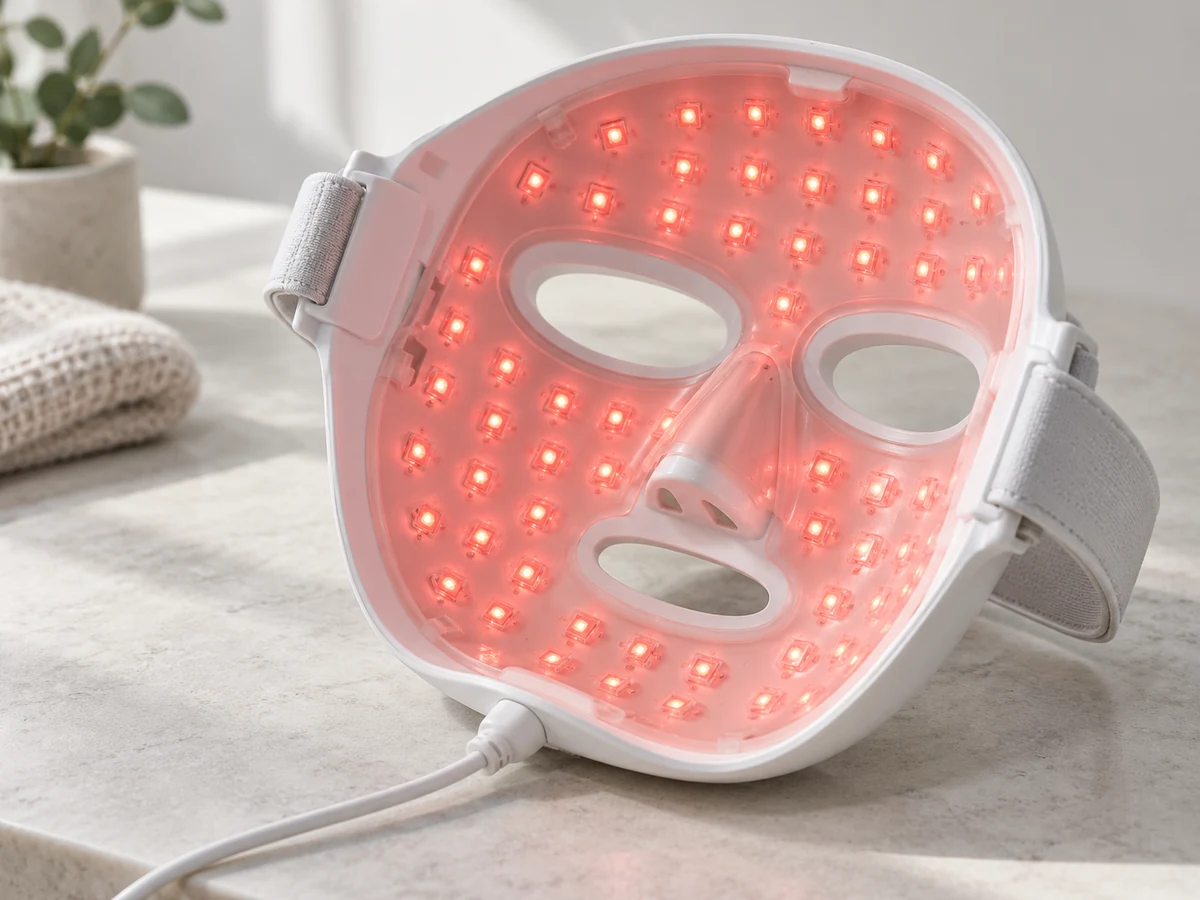
Higher power also does not automatically mean a better result. The cellular response to photobiomodulation depends on the dose and does not always increase along with it. That is why it is important to follow the recommended treatment duration rather than trying to get a faster effect through stronger or longer irradiation.
How to assess clinical evidence of effectiveness
If a manufacturer describes an LED mask as clinically tested, find the study it refers to. Check whether that exact model was used, which skin concern was studied, and whether the result matched the advertising claims.
Pay attention to the number of participants and how the results were assessed. Studies with a control group, in which changes were measured using defined criteria, are more reliable than ordinary “before and after” photos. It is also worth checking who funded the work: manufacturer involvement does not make a study unreliable, but independent assessment of the results increases confidence in the conclusions.
If you cannot find the publication, ask the manufacturer for its title or DOI. You can verify studies, among other places, via PubMed.
What does FDA-cleared mean?
The label FDA-cleared on an LED mask means that the U.S. Food and Drug Administration (FDA) has allowed the device to be marketed in the United States for a specified use. Most often, such devices go through the 510(k) process. The manufacturer must show that its mask does not differ significantly in intended use, characteristics, and safety level from a device already legally sold on the U.S. market. The FDA reviews the submitted documents and decides whether they are sufficient for such a conclusion.
For the buyer, the key point is to find out exactly what use the FDA cleared the mask for. For example, if a device received FDA-cleared status for acne treatment, this does not confirm its effectiveness against wrinkles, pigmented spots, or skin laxity.
Different rules apply in Europe for allowing medical devices onto the market, and the FDA-cleared designation does not replace the documents required to sell a device in European countries.
Checklist before buying an LED mask
Before buying, check not only the price and set of features but also the characteristics that determine the device’s effectiveness and safety.
| What to check | What to look for |
|---|---|
| Intended use | Which skin concern the mask was developed for: wrinkles, acne, or other indications |
| Clinical studies | Whether data exist for the specific model and the recommended usage mode |
| Wavelengths | Whether exact values in nanometers are specified, not just color names |
| Power and dose | Whether the technical parameters of light exposure and the conditions under which they were measured are stated |
| Eye protection | Whether protection is provided and which rules apply to each mode |
| Usage schedule | How long each procedure lasts and how often the mask should be used |
| Safety | Contraindications, limitations, and cleaning instructions |
| Warranty and support | Return terms, warranty service conditions, and whether consultation is available |
| Expected result | Whether specific changes in skin condition are supported, rather than only general promises of rejuvenation |
It is not worth relying on price alone. A more expensive mask may be more comfortable, use higher-quality materials, or offer better customer support, but this does not guarantee a stronger effect on the skin or a more noticeable result.
How to use an LED mask in your home skincare routine
LED mask before or after skincare products?
Most at-home LED masks are recommended for use on clean, dry skin before applying cream, serum, or other skincare products. Makeup and some cosmetic formulas may affect how light passes through, so it is best to follow the order specified in the device instructions.
After the procedure, you can return to your usual skincare routine unless the manufacturer sets other restrictions. You may buy a special “LED serum,” but it is not necessary: there is still no convincing evidence that such products by themselves increase the effectiveness of light therapy.
Can you combine an LED mask with retinol and tretinoin?
LED therapy can be included in a routine that uses retinol or prescription tretinoin, but it is important to consider the condition of your skin and the recommendations for the specific device. Retinoids often cause dryness, peeling, and irritation, especially at the beginning of use. If the skin is already red, burning, or peeling, it is better to postpone additional procedures until it recovers.
Not all manufacturers give the same recommendations regarding the combination of LED therapy with retinoids. For example, the instructions for Shark CryoGlow recommend applying retinol after the session and being cautious when first starting retinoids or during tretinoin treatment.
If you use prescription medications for acne treatment, coordinate the addition of LED procedures with your dermatologist. You should not change your prescribed treatment plan just to use the mask.
How often can you use an LED mask?
The frequency of procedures depends on the design and parameters of the device. Some masks are intended for daily use, while others are designed for several sessions per week. There is no single regimen that suits all at-home LED masks, so follow the manufacturer’s instructions.
If you miss a session, there is no need to double its duration the next day. Excessive irradiation does not guarantee faster skin improvement.
How do you clean an LED mask?
After use, clean the surfaces of the mask that come into contact with the face. Use only the products permitted by the manufacturer: some materials can be damaged by alcohol or other cleansers. Do not allow water to reach electrical components if the device is not designed for such contact.
Regular cleaning is especially important for acne-prone skin, since sebum, cosmetics, and impurities may remain on contact surfaces.
Is it worth buying an LED face mask?
An LED mask is worth considering primarily for reducing fine wrinkles and as an addition to the treatment of mild to moderate acne. These are the areas with the strongest clinical evidence. You should expect gradual, usually moderate improvement after several weeks of regular sessions.
If your goal is to reduce signs of photoaging, start with daily sun protection. Retinoids also help improve skin condition and reduce certain manifestations of photoaging. An LED mask may serve as an additional skincare tool.
For acne, treatment is still based on medications with proven effectiveness. LED therapy may help reduce the number of breakouts, but if you have painful, widespread acne or developing scars, it is better to consult a dermatologist.
For correcting marked skin laxity, deep scars, vascular redness, and pigmented spots, an at-home LED mask will not be the best choice. These concerns require other approaches, including professional procedures or medication.
The key question before buying is whether the expected result is worth the price of the mask and the time required for regular procedures. If you want to slightly improve skin texture, reduce fine wrinkles, or supplement acne treatment, the purchase may be justified. If you expect noticeable lifting or correction of serious skin changes, it is better to choose another method.
Conclusion: what results can you expect from LED masks
At-home LED masks have clinically confirmed potential, primarily in reducing fine wrinkles and the number of breakouts in mild to moderate acne. For rejuvenation, red and near-infrared light are the best studied; for acne treatment, blue and combined blue-red light are the best studied. Results develop gradually and usually require several weeks of regular use.
At the same time, at-home LED therapy cannot replace methods intended to correct marked skin laxity, facial volume loss, or deep post-acne scars. For pigmented spots and persistent redness, evidence of its effectiveness is still insufficient.
An LED mask makes sense when its capabilities match the specific skin concern and your expectations match the results seen in clinical studies.
Sources
- Das RK, et al. Efficacy and Safety of At-Home Light-Emitting Diode Photobiomodulation for Facial Rejuvenation: A Systematic Review. Aesthetic Plastic Surgery. 2026. PubMed.
- Park SH, Park SO, Jung JA. Clinical study to evaluate the efficacy and safety of home-used LED and IRED mask for crow's feet: A multi-center, randomized, double-blind, sham-controlled study. Medicine. 2025;104(7):e41596. PubMed.
- Ershadi S, Barbieri JS. At-Home LED Devices for the Treatment of Acne Vulgaris: A Systematic Review and Meta-Analysis. JAMA Dermatology. 2025;161(5):552–555. Full study text.
- Raef HS, et al. Home-Based Dermatologic Devices for Acne and Rejuvenation: Evidence-Based Insights. Dermatologic Surgery. 2026. PubMed.
- Photobiomodulation CME part I: Overview and mechanism of action. Journal of the American Academy of Dermatology. PubMed.
- Emerging lasers and light-based therapies in the management of acne: a review. PubMed Central.
- Direct and Indirect Effects of Blue Light Exposure on Skin: A Review of Published Literature. PubMed.
- American Academy of Dermatology. Is red light therapy right for your skin? American Academy of Dermatology.
- Clinical case report of retinal injury associated with blue-light face-mask exposure. PubMed.
- U.S. Food and Drug Administration. Medical Device Safety and the 510(k) Clearance Process. FDA.
- Shark. CryoGlow LED Face Mask: Safety & Usage Considerations. Shark Support.
- Kim SK, et al. Skin photorejuvenation effects of light-emitting diodes (LEDs): a comparative study of yellow and red LEDs in vitro and in vivo. Clinical and Experimental Dermatology. 2016;41(7):798–805. PubMed.
- Li WH, et al. Low-level red plus near infrared lights combination induces expressions of collagen and elastin in human skin in vitro. International Journal of Cosmetic Science. 2021;43(3):311–320. PubMed.