

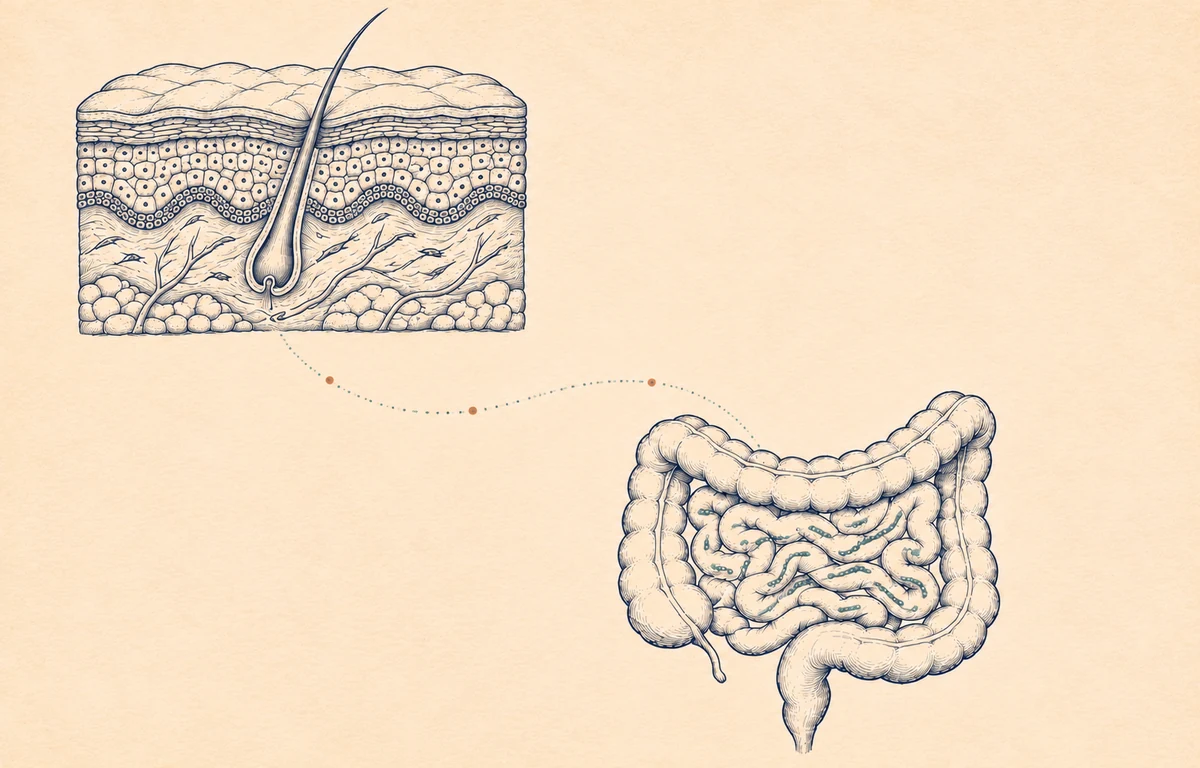
When acne does not go away or the face often becomes red, a question arises: can the gut affect the skin? Researchers are studying how gut bacteria and the substances they produce interact with the immune system and inflammatory processes in the skin. This area is known as the gut–skin axis.
In acne, researchers are looking at the composition of gut bacteria and probiotics. In rosacea, they are studying links with certain digestive disorders and conditions such as small intestinal bacterial overgrowth (SIBO). Let’s look at what the research has shown and how these findings can be applied in practice.
How the gut may be connected to the skin
Gut bacteria take part in processing food and produce various substances. Some of these substances affect how the immune system works. Its responses can influence inflammation in the skin and the protective barrier that retains moisture and helps protect the skin from irritants. One example of such substances is short-chain fatty acids. They are formed when gut bacteria process fiber. This is the pathway researchers tested in an animal experiment.
What the mechanism study showed
In an experimental model of allergic inflammation in mice, butyrate — one of the short-chain fatty acids — affected the function of skin cells and helped maintain the skin barrier. This shows one possible way in which the gut microbiome may interact with the skin. Although acne and rosacea were not studied in this research, in the model of allergic inflammation butyrate influenced the skin barrier. This mechanism may also be relevant to these conditions.
The gut and the skin: what is known about the microbiome’s link with acne and rosacea
One possible pathway of interaction
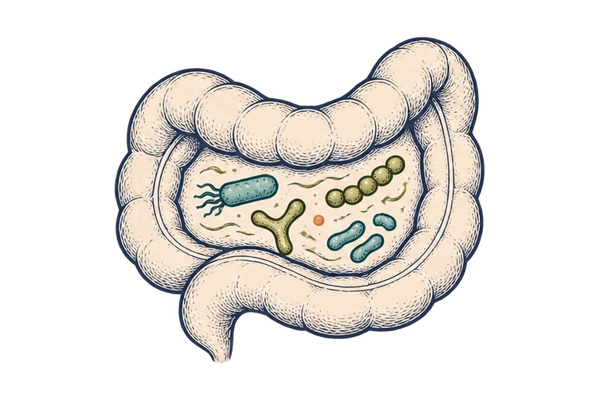
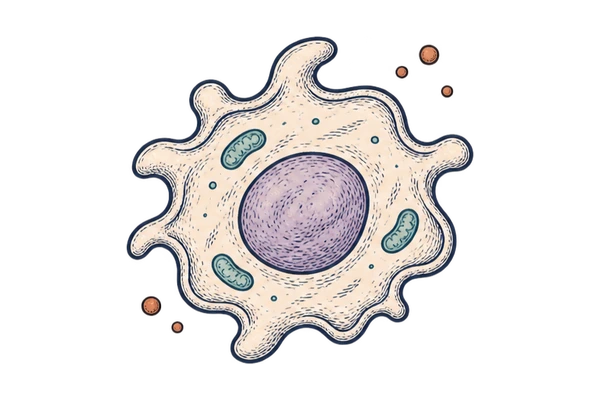
Gut microbiome
A community of bacteria and other microorganisms.
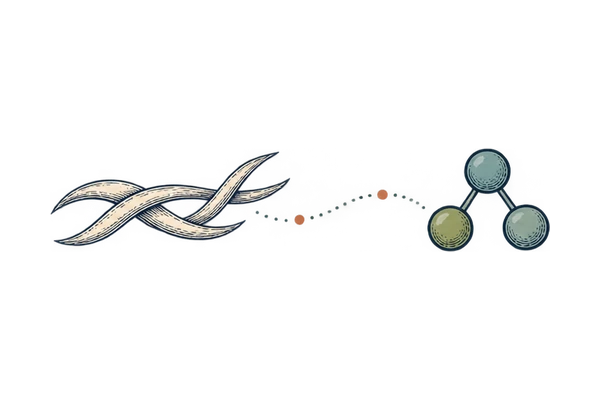
Metabolites
For example, butyrate — a product of fiber fermentation.
Immune signals
Metabolites can influence immune system responses.
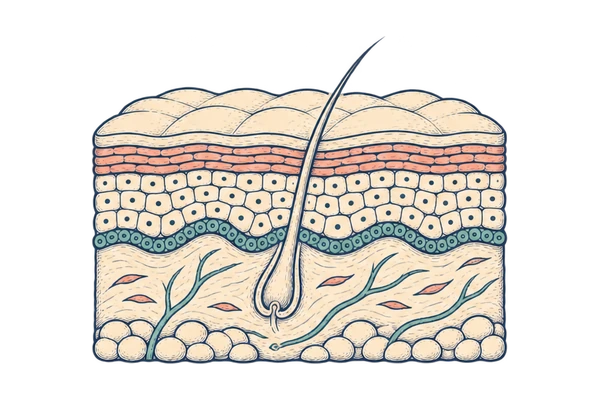
Skin response
Inflammation and protective barrier function may change.
Acne: what researchers are looking for
Acne develops in the hair follicle, where the sebaceous gland is located. Its course is influenced by sebum production, follicle blockage, local bacteria, and inflammation. Studies of the gut microbiome help clarify whether these processes are accompanied by changes in the gut.
When researchers found differences in the composition of the gut microbiota in people with and without acne, the next question arose: could a probiotic affect the course of acne? This is being tested in clinical trials: participants take a specific probiotic formula, and researchers assess how the severity of breakouts changes.
What acne studies show
In a study of the gut microbiome in acne, researchers compared 43 people with acne and 43 control participants and found differences between the groups. In a 2026 pilot study, skin and stool samples from 17 patients with moderate or severe acne and 14 participants without acne were compared; the authors also described differences in microbial communities.
A probiotic formula containing Lacticaseibacillus rhamnosus and Arthrospira platensis was also tested separately. In a 12-week randomized study, an improvement of at least one category on an acne severity scale was recorded in 20 of 40 participants who took the formula and in 10 of 34 participants in the placebo group.
What meta-analyses of probiotics in acne found
A 2025 meta-analysis pooled the results of three randomized studies involving 231 people. On average, probiotic use was associated with a moderate reduction in the number of inflammatory acne lesions compared with control groups. However, the study results differed noticeably from one another.
Another meta-analysis of nine studies also found improvements in certain acne measures after 12 weeks of probiotic use. In other words, a positive effect was observed not only in isolated trials, but there is still not enough evidence to determine the most effective strains and dosing regimens. More details are available in the 2025 meta-analysis of randomized studies.
Thus, certain probiotic formulas may be a useful addition to acne treatment. However, the foundation of therapy remains topical and systemic medications, which a dermatologist selects depending on the severity of the condition.
Rosacea: when digestive health matters
In rosacea research, the gut-related topic is approached differently. Scientists are investigating whether certain digestive disorders occur more often in people with rosacea, and whether treating a specific confirmed gut condition can affect the skin.
What studies of rosacea and SIBO have shown
In a Danish cohort, researchers compared data from 49,475 people with rosacea and more than 4.3 million control participants. People with rosacea were more often diagnosed with celiac disease, Crohn’s disease, ulcerative colitis, and irritable bowel syndrome. After statistical adjustment, no association with SIBO or Helicobacter pylori was found in this cohort. Thus, the Danish population-based study of rosacea and digestive disorders showed that these diagnoses co-occur, but by itself it did not establish that one condition causes the other.
At the same time, the absence of a statistically significant association at the level of a large population does not rule out that treating confirmed SIBO may help individual patients.
In another clinical study, patients were first tested for SIBO. Among those in whom SIBO was confirmed, after rifaximin treatment the rash disappeared in 20 of 28 people and decreased significantly in another six. In the placebo group, the condition mostly remained unchanged or worsened. These results are described in a clinical trial of treatment for confirmed SIBO.
Probiotics in rosacea are also being tested as an add-on to treatment. In one study, participants first received doxycycline and then a probiotic mixture, placebo, or no additional intervention.
What the probiotic study tested
The study included 60 people with rosacea. After a two-week course of doxycycline, participants took a specific mixture of five strains, placebo, or received no additional treatment for three months. In the probiotic group, some measures improved, including rosacea severity score and skin hydration. Details are provided in the study of a probiotic combined with doxycycline.
What to do in practice
If bloating, abdominal pain, excessive gas, diarrhea, or constipation recur, contact your family doctor or a gastroenterologist. Before the consultation, write down when symptoms occur, what you ate, and whether you noticed any skin changes.
If you have rosacea and also have regular digestive symptoms, tell your doctor about both conditions. If needed, they will order testing for SIBO — breath tests are used for this purpose.
Eat a varied diet: add vegetables, fruits, legumes, nuts, and whole grains to your meals. If you notice a link between certain foods and a skin flare-up, note when it happens. At present, guidelines do not recommend a specific diet for treating acne.
If you are considering a probiotic for acne, pay attention to the specific strains and formula: the results of studies of one product cannot be applied to all probiotics.
What is important to remember
Research confirms that the gut microbiome may be linked to skin condition, but its role in acne and rosacea is still being clarified. Certain probiotic formulas have shown positive results in clinical trials, and treatment of confirmed SIBO in some patients with rosacea has been accompanied by skin improvement. However, these approaches do not yet replace standard dermatological treatment.
The gut is only one of the factors that may be connected with skin condition. Sun exposure, pollution, diet, sleep, and stress also act in combination. This is discussed in more detail in the article on the skin exposome and the influence of environment and lifestyle. And how stress signals may show up in the skin is covered in the article on the skin–brain axis.
Sources
- Trompette A, Pernot J, Perdijk O, et al. Gut-derived short-chain fatty acids modulate skin barrier integrity by promoting keratinocyte metabolism and differentiation. Mucosal Immunology. 2022;15(5):908–926.
- Deng Y, Wang H, Zhou J, et al. Patients with Acne Vulgaris Have a Distinct Gut Microbiota in Comparison with Healthy Controls. Acta Dermato-Venereologica. 2018;98(8):783–790.
- Lesiak A, Krawczyk A, Piasta J, et al. Gut and skin dysbiosis in acne vulgaris: a comparative microbiome analysis. Frontiers in Cellular and Infection Microbiology. 2026;16:1904271.
- Eguren C, Navarro-Blasco A, Corral-Forteza M, et al. A Randomized Clinical Trial to Evaluate the Efficacy of an Oral Probiotic in Acne Vulgaris. Acta Dermato-Venereologica. 2024;104:adv33206.
- Egeberg A, Weinstock LB, Thyssen EP, et al. Rosacea and gastrointestinal disorders: a population-based cohort study. British Journal of Dermatology. 2017;176(1):100–106.
- Parodi A, Paolino S, Greco A, et al. Small intestinal bacterial overgrowth in rosacea: clinical effectiveness of its eradication. Clinical Gastroenterology and Hepatology. 2008;6(7):759–764.
- Yu J, Duan Y, Zhang M, et al. Effect of combined probiotics and doxycycline therapy on the gut–skin axis in rosacea. mSystems. 2024;9(11):e01201-24.
- Reynolds RV, Yeung H, Cheng CE, et al. Guidelines of care for the management of acne vulgaris. Journal of the American Academy of Dermatology. 2024;90(5):1006.e1–1006.e30.
- Tjiu JW, Lu CF. Oral Probiotics in Acne vulgaris: A Systematic Review and Meta-Analysis of Double-Blind Randomized Clinical Trials. Medicina. 2025;61(12):2152.
- Lin HW, Tam KW, Huang YC. Efficacy of oral probiotics in patients with acne: a systematic review and meta-analysis of randomized trials. Clinical and Experimental Dermatology. 2026;51(1):68–77.