






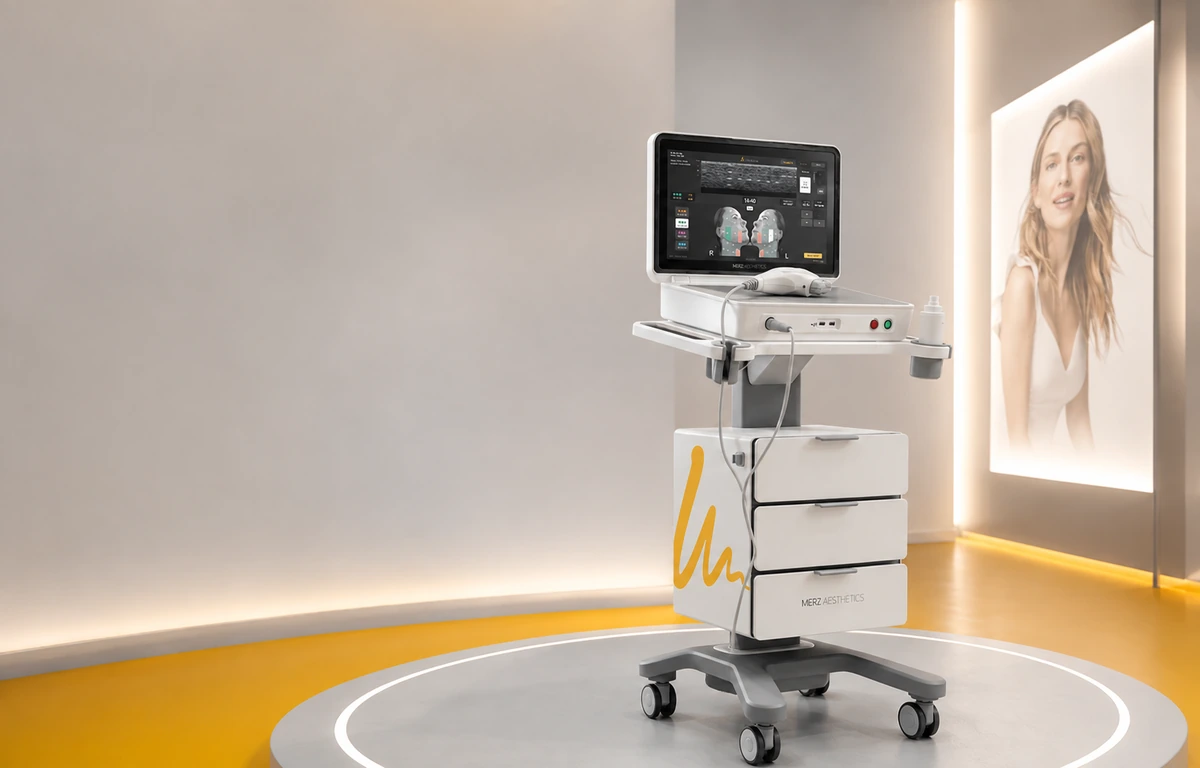
On August 11, 2026, Merz Aesthetics announced a new regulatory decision for Ultherapy PRIME in the United States. The FDA granted clearance for the use of the system to improve the appearance of lax skin in the knee area.
The news is notable not only because it adds another indication for a specific device. It also reflects a broader trend in energy-based aesthetic medicine: technologies long associated mainly with the face and neck are gradually expanding into the treatment of specific body areas.
What exactly has changed for Ultherapy PRIME?
According to Merz Aesthetics, the new FDA clearance allows the system to be used to improve the appearance of skin laxity - looseness or reduced firmness of the skin - in the knee area.
The company positions Ultherapy PRIME as the first energy-based aesthetic device with such an indication for this area. Importantly, this is the manufacturer’s statement regarding the product’s regulatory status in the U.S. market, not a conclusion that the technology is automatically more effective than all other correction methods.
The list of U.S. indications for the system also includes treatment of skin laxity of the abdomen and the upper arms, both anterior and posterior. For the face and upper body, the technology is indicated for lifting certain areas and improving lines and wrinkles of the décolleté.
“The expansion of indications to the knees is more than just a new treatment area. It reflects growing demand for noninvasive lifting and skin tightening of the body.”
How does Ultherapy PRIME work?
Ultherapy PRIME uses microfocused ultrasound with real-time visualization - MFU-V. The system allows the specialist to visualize the tissues and select the depth at which the ultrasound energy is delivered.
At designated points, the energy creates controlled zones of thermal impact. This then triggers a tissue response associated with remodeling of the extracellular matrix, collagen, and elastin. A histological study of MFU-V published in 2025 in the Journal of Cosmetic Dermatology demonstrated the formation of such zones at different preset depths and subsequent changes associated with remodeling of collagen and elastin fibers.
We discussed the principle in more detail in the article “HIFU lifting without exaggeration: how focused ultrasound works and what to expect from it”. An important distinction of Ultherapy is the presence of ultrasound visualization: the results of studies on a specific MFU-V system should not be automatically extrapolated to any device marketed under the generic name HIFU.
Why did the knee area become a separate indication?
The skin over the knee joint can gradually lose density and elasticity with age. Its appearance is also affected by fluctuations in body weight, the condition of the subcutaneous tissues, and individual anatomy.
For energy-based methods, this is not a simple area: visible wrinkling may be related not only to the quality of the skin itself. If the main issue is a significant excess of tissue, device-based remodeling cannot mechanically remove that excess.
Therefore, the new indication should not be read as a promise of “knee tightening” for every patient. FDA clearance means the emergence of a specific approved use scenario for the system, but the actual result depends on the baseline condition of the tissues and proper patient selection.
Device-based aesthetics is increasingly moving beyond the face
The expansion of Ultherapy PRIME indications clearly illustrates a shift in the market. Energy-based technologies are increasingly being used not only for the face, neck, or décolleté, but also for targeted treatment of skin quality and laxity on the body.
At the same time, the mere appearance of a new indication does not eliminate the limits of the technology. Ultrasound can influence tissue remodeling, but it does not replace the surgical removal of pronounced excess skin and should not be evaluated according to the principle of “the stronger the device, the better the result.”
We wrote separately about this difference in the article “The limits of cosmetology methods: where the effect ends and why realistic expectations matter”. For energy-based procedures, it is especially important that the mechanism of action corresponds to the actual cause of the problem.
What is known about safety?
In the official information from Merz Aesthetics, the most common adverse reactions reported in clinical studies of the Ulthera System include redness, swelling, pain, and temporary nerve effects. The full risk profile depends on the treatment area and should be assessed in accordance with the current instructions for use of the system.
This is another reason not to treat noninvasiveness as a synonym for the complete absence of risk. Microfocused ultrasound delivers energy into the tissues, so anatomy, correct depth, parameters, visualization, and specialist experience all matter.
For the patient, the practical question is not only whether the device has FDA clearance. It is equally important to understand what exactly is causing the visible laxity in a specific area, how pronounced it is, and whether the chosen mechanism is capable of delivering a clinically noticeable improvement.
About the company
Merz Aesthetics is an international company in the field of medical aesthetics and part of the Merz Group. Its portfolio includes injectable products, energy-based technologies, and professional skincare products. The company’s brands include Ultherapy, Radiesse, Belotero, and Xeomin.
Previously, Cosmet.Info reported on the expansion of the European indications for another company product - BELOTERO Balance.