





In just a few years, RF microneedling has evolved from a relatively niche device-based technique into one of the most heavily promoted procedures in aesthetic medicine. It is offered for the correction of acne scars, enlarged pores, uneven skin texture, fine lines, reduced skin firmness, and poorly defined facial contours. In marketing materials, the procedure often appears almost universal: minimal surface injury, a short recovery period, and gradual formation of new collagen.
Some of these claims have a scientific basis. Clinical studies show that RF microneedling can improve the appearance of atrophic scars, skin texture, and moderate signs of age-related changes. However, the evidence base is not equally strong for all indications, and outcomes depend on the specific device, needle type, penetration depth, energy level, pulse duration, number of passes, and anatomical area treated.
In April 2026, a systematic review of 41 studies, including 15 randomized trials, was published. The authors concluded that the method has convincing efficacy for a number of dermatological indications and is generally well tolerated. At the same time, they emphasized substantial differences between devices and protocols, inconsistent reporting of technical parameters, and an insufficient number of long-term follow-up studies.
Alongside the accumulation of positive data, reports of serious complications have also emerged. In October 2025, the U.S. Food and Drug Administration reported registered cases of burns, scarring, nerve injury, loss of subcutaneous fat, and tissue deformity after certain uses of RF microneedling.
This does not mean that the procedure is unsafe for every patient. But it cannot be regarded as an ordinary salon treatment that simply needs to be performed according to a standard protocol. RF microneedling remains a useful tool in the hands of a trained specialist, but the line between controlled tissue remodeling and unwanted injury may be much thinner than advertising descriptions suggest.
How does RF microneedling change tissues?
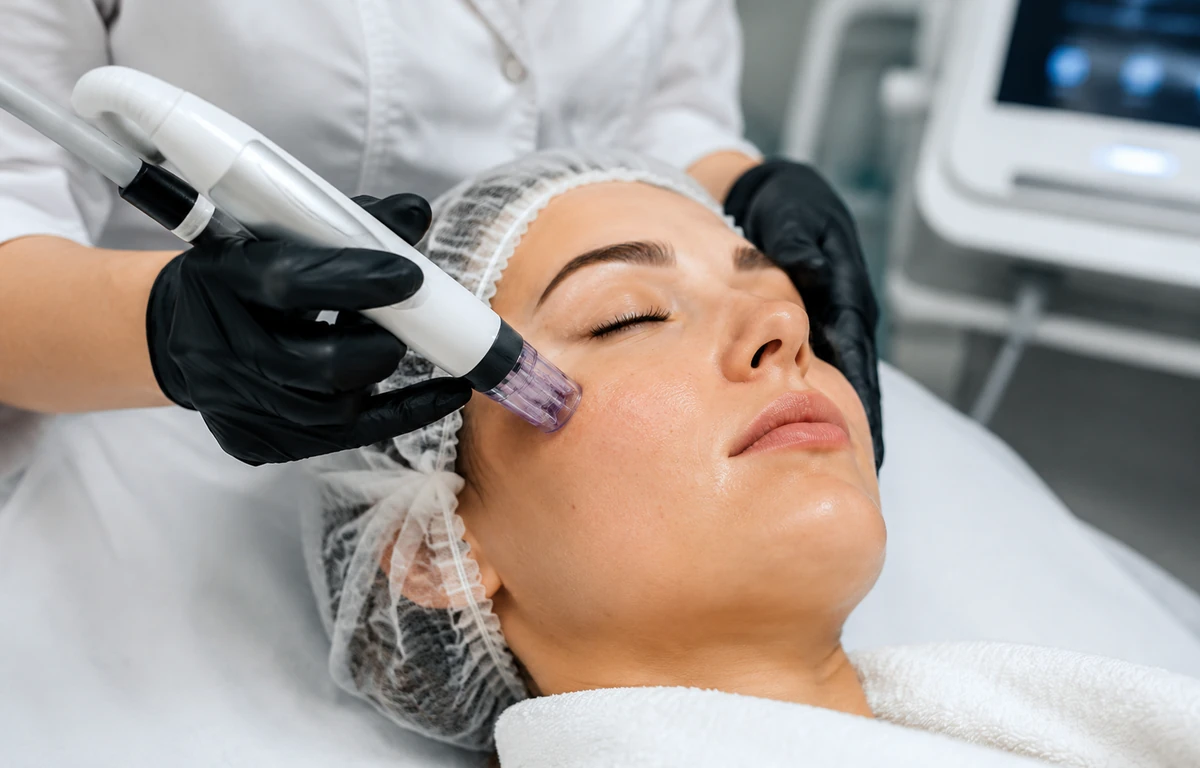
During the procedure, a handpiece with a group of fine needles is pressed sequentially against the skin. The needles penetrate to a preset depth, after which radiofrequency energy is delivered through them. A small zone of controlled heating forms around each needle or its active part.
In this way, the tissues are exposed to two types of impact. The first is mechanical, associated with numerous micropunctures. The second is thermal, caused by radiofrequency energy. Controlled injury triggers the inflammatory phase of healing, fibroblast activity, remodeling of the extracellular matrix, and the gradual formation of new collagen and elastin.
Initial contraction of collagen fibers may create an early feeling of firmer skin, but the main result does not form immediately. Dermal remodeling continues over the following weeks and months. For this reason, the final assessment of the effect should not be made a few days after the procedure, when appearance is still influenced by swelling, redness, and the temporary tissue response.
RF microneedling should not be equated with classic microneedling, where the main stimulus is the mechanical creation of microchannels. The classic technique may be combined with PRP or PRF to support tissue repair — we discussed its possibilities, evidence base, and limitations in more detail in the article “Microneedling with PRP and PRF: effectiveness and limitations”.
In RF microneedling, radiofrequency energy is added to the mechanical effect, creating controlled zones of heating within the tissues. This can enhance dermal remodeling, but it also increases the need for precise settings, anatomical knowledge, and depth control. Therefore, classic microneedling and RF microneedling are not interchangeable procedures: they differ in mechanism of action, type of effect, range of risks, and equipment requirements.
Not all RF devices work in the same way. They may use monopolar or bipolar energy, insulated or non-insulated needles, different numbers of electrodes, and different handpiece designs. In insulated needles, energy is released mainly near the active portion, whereas non-insulated needles may heat tissues along a larger part of their surface. Some systems also monitor temperature or the electrical impedance of tissues.
Because of these differences, the name of the procedure itself says almost nothing about the actual effect. Two patients may both undergo “RF microneedling,” but with different depths, energy levels, pulse durations, and heat distribution. Even the results of a study on a specific device cannot automatically be extrapolated to all devices in this category.
Studies have used different depths, numbers of passes, intervals between sessions, and energy levels. Tissue temperature, pulse duration, and cooling methods were not always reported by the authors. This heterogeneity makes it difficult to create a single protocol even for the same indications.
“Standardized assessment criteria, longer follow-up, and more accurate reporting of device settings are needed.”
Authors of the systematic review, Aesthetic Plastic Surgery, 2026
When can the method truly be useful?
The most consistent evidence base has been accumulated for the correction of atrophic acne scars. In most of the studies included in the systematic review, a course of procedures reduced scar severity on clinical scales, improved skin texture, and increased patient satisfaction.
However, acne scars are not a uniform problem. Rolling scars, shallow boxcar defects, and narrow deep scars have different structures. Some are associated with dense fibrous bands that tether the skin surface. In other cases, the main problem is tissue loss or a sharply depressed defect.
A single device-based procedure cannot affect all these mechanisms with equal effectiveness. RF microneedling can be an important component of treatment, but it is not always a full substitute for subcision, focal chemical reconstruction, fractional laser treatment, injectable correction, or surgical methods. The choice depends on scar type, skin phototype, previous treatment, and the acceptable recovery period.
Comparative studies show that RF microneedling can produce results comparable to fractional lasers, especially when overall improvement in atrophic scars is assessed. At the same time, some studies demonstrate a stronger effect of fractional CO2 laser in pronounced post-acne scarring, but better tolerability and a shorter recovery period with RF microneedling.
This does not make one method unconditionally better. It is more accurate to speak about different balances of efficacy, pigmentation risk, pain, and recovery time. For a patient with a high risk of post-inflammatory pigmentation, the ability to work without direct dependence on melanin may be an important advantage of RF microneedling, although the risk of pigmentary changes does not disappear completely.
The second indication with relatively consistent results is moderate loss of firmness and signs of photoaging. Studies have recorded improvements in fine lines, texture, dermal density, elasticity, and the condition of the skin in the lower third of the face.
However, the word “tightening” often creates inflated expectations. RF microneedling can somewhat improve skin density and make contours look visually more defined, but it does not reposition descended deep tissues, remove significant excess skin, or replace a surgical facelift. The more pronounced the age-related changes, the less noticeable the role of dermal remodeling alone will be.
Positive results have also been described for stretch marks, wrinkles around the eyes, enlarged pores, and uneven texture. For rosacea, melasma, active acne, and some other conditions, promising data have been published, but the number of studies is smaller and the protocols differ substantially.
Treatment of pigmentation requires particular caution. Controlled treatment can sometimes improve the condition, but in predisposed patients, the inflammatory response may cause or worsen post-inflammatory hyperpigmentation. In the presence of active inflammation, an impaired skin barrier, or unstable melasma, the underlying condition may need to be treated first.
RF microneedling is usually performed as a course, but there is no universal number of sessions. Studies have used from one to several procedures with different intervals. The number of sessions, depth, and energy level depend on the problem, area, tissue response, and specific device.
Prescribing the same course to all patients without assessing the intermediate response cannot be considered an individualized approach. After each session, it is important to evaluate not only the desired improvement, but also the duration of redness, swelling, pigmentary changes, sensitivity, and the overall course of recovery.
The realistic goal of the procedure is gradual improvement, not complete elimination of scars, pores, or age-related changes. Before-and-after photographs should be taken in the same lighting, from the same angle, and with the face in the same position. Otherwise, differences in shadows, makeup, or facial expression may create the impression of a result that is not actually present.
Why does the procedure sometimes cause serious complications?
After properly performed RF microneedling, expected reactions may include redness, moderate swelling, a burning sensation, tenderness, pinpoint bleeding, dryness, and small crusts. In most clinical studies, these effects were mild and resolved within a few days.
However, the absence of serious complications in a small study does not prove that they are impossible. In clinical trials, procedures are usually performed by trained specialists, patients are carefully selected, and parameters are limited by the protocol. If a study includes only a few dozen people, a rare problem may not occur even once.
In real-world practice, different devices are used, including devices with insufficiently studied safety profiles. Specialists have varying levels of training, and manufacturers may recommend different parameters for similar indications. An additional factor is the desire to achieve a stronger result in one procedure, which may encourage increasing the depth, energy, pulse duration, or number of passes.
On October 15, 2025, the FDA issued a separate safety communication on RF microneedling. The regulator reported data it had received on burns, scarring, loss of subcutaneous fat, tissue deformity, and nerve damage. In some cases, affected patients required medical intervention or surgical correction.
“RF microneedling is a medical procedure, not a cosmetic service.”
U.S. Food and Drug Administration, 2025
The FDA warning does not contain data that would allow the exact frequency of each complication to be determined. Nor does it mean that all devices or all protocols carry the same level of risk. Its main message is different: serious injuries are real, not merely theoretically possible.
One of the most discussed complications is unwanted loss of subcutaneous fat. Radiofrequency energy generates heat not only in the dermis. If the needles penetrate too deeply or the thermal zone spreads below the intended level, the effect may reach the subcutaneous tissue.
On the face, even a small change in its volume can appear as hollowing, asymmetry, or accentuation of age-related contours. This risk is especially important in areas where tissues are thin or natural volume is already reduced. Trying to “tighten” a thin face more aggressively may lead to the opposite visual result: the skin surface becomes firmer, but the face looks more depleted.
Another group of problems is associated with excessive superficial heating or repeated overlap of treated areas. The consequences may include burns, prolonged redness, pigmentation, and scar formation. Over bony prominences, the risk also depends on the pressure applied by the handpiece: tissue is compressed between the needles and bone, and the actual depth of effect may differ from what was expected.
Nerve injury may manifest as prolonged numbness, altered sensation, pain, or muscle weakness. Such symptoms should not be dismissed as normal recovery after the procedure. They require medical evaluation, especially if they do not improve or become worse.
A real clinical case. Dermatologists Dedianto Hidayat and Sinta Murlistyarini described the case of a 27-year-old woman with Fitzpatrick skin type IV, atrophic acne scars, and intermittent breakouts. She underwent a bipolar RF microneedling procedure to correct the scars.
One month after the first session, numerous uniform papules remained on her forehead, their distribution reproducing the pattern of the needles in the tip. Pigmented bands resembling characteristic “tracks” appeared over the right zygomatic arch. In the medical literature, this reaction is called tram-track scarring — scarring that reproduces the geometry of the handpiece.
Treatment included red LED light at a wavelength of 640 nm, salicylic acid peels, and a home regimen with azelaic and retinoic acids. After three months, the condition had improved noticeably, and after six months, the authors recorded complete resolution of the lesions.
The source of the case is the Journal of Cosmetic and Laser Therapy. The authors emphasized that there is no standard therapy for this complication, and that areas over bony prominences require particular caution regarding needle depth, energy level, pulse duration, and handpiece pressure.
This case does not allow the frequency of the complication to be assessed and does not prove that a similar reaction will occur in other patients. Its value lies in showing the real course of the problem: an unwanted imprint from the handpiece may persist for months and require separate treatment.
Where is the boundary of safe use?
Safe RF microneedling begins not with choosing a device, but with correctly identifying the problem. Uneven texture, atrophic scars, laxity, puffiness, lack of subcutaneous volume, and tissue descent may look similar to a patient but require different approaches.
If the main cause of age-related changes is volume loss or displacement of deep tissues, additional heating of the dermis will not necessarily produce the desired result. If a scar is tethered by a fibrous band, collagen stimulation without mechanical release may have a limited effect. If active pigmentation is sustained by inflammation, an intensive procedure may worsen the condition.
Before treatment, the specialist should collect information about previous device-based and injectable procedures, surgeries, implants, tendency toward scarring and pigmentation, active skin diseases, infections, impaired healing, and medications the patient is taking.
The procedure may be postponed or not recommended in the presence of an active infection, rash, or flare of a dermatological disease in the treatment area, blood-clotting disorders, uncontrolled diabetes, significant immunodeficiency, a tendency toward abnormal scarring, and other risk factors.
Pregnancy, breastfeeding, anticoagulant use, recent treatment with systemic retinoids, and the presence of metal implants or electronic medical devices require individual decision-making. What matters is not universal lists from the internet, but the instructions for the specific device, the patient’s medical history, and the physician’s decision.
A darker skin phototype is not an automatic contraindication. One of the advantages of RF microneedling is considered to be its lower dependence on melanin compared with many laser techniques. However, the risk of post-inflammatory hyperpigmentation does not disappear, especially with aggressive parameters, active tanning, or improper post-procedure care.
Before the session, the patient has the right to receive clear answers to practical questions:
- which device and which tip will be used;
- whether this device is intended for the selected area and indication;
- what training the specialist has and how often they work with this device;
- why a specific depth and energy level have been chosen for each area;
- how many passes are planned and whether they will overlap;
- what result can realistically be expected for this specific problem;
- what normal reactions may occur after the session;
- which symptoms require immediate medical attention;
- who will manage treatment if a complication occurs.
A sterile single-use cartridge must be used for each patient and each procedure. Reusing a tip after cleaning is unacceptable because of the risk of transmitting infections. Proper skin preparation, sterility of the working area, and compliance with the manufacturer’s instructions are essential.
Parameters must be adjusted according to anatomy. The skin of the forehead, around the eyes, on the cheeks, chin, and neck has different thicknesses. The depth of fat compartments, blood vessels, and nerves also varies. Using the same settings for the entire face is not a sign of standardization. On the contrary, it may indicate a lack of anatomical planning.
Caution is especially important on thin faces, in the temporal area, on the forehead, near the zygomatic arch, and in other areas with a thin layer of soft tissue or close proximity to bony prominences. Greater depth and higher energy do not automatically mean a better result.
After the procedure, the skin needs gentle recovery. The specific regimen should be determined by the specialist, taking into account the intensity of treatment. In general, it is important not to traumatize the treated area, not to remove crusts, to avoid excessive sun exposure, and not to add acids, retinoids, scrubs, or other irritating products on one’s own.
Increasing pain, worsening swelling, blisters, weeping, pus, pronounced numbness, muscle weakness, clear marks from the handpiece, hollowing, or tissue asymmetry should not be explained away as “normal cleansing” or “active collagen formation.” Such changes require timely medical assessment.
RF microneedling has a real evidence base, especially for atrophic acne scars, uneven texture, and moderate age-related changes. But its effectiveness does not make the procedure universal, and a short recovery period does not mean the absence of serious risks.
Safe use requires the correct diagnosis, a realistic goal, verified equipment, sterile single-use cartridges, individualized parameters for each area, and a specialist who understands not only how the device works, but also tissue anatomy. Under these conditions, RF microneedling can be a justified procedure. Without them, controlled remodeling can easily turn into uncontrolled injury.