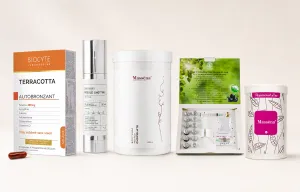






The material was provided by a project developing in the luxury beauty sector — the online store Lady.best.
Premium beauty retail has found itself under pressure from two sides. On the one hand, there are marketplaces that have accustomed customers to speed, endless choice, and constant price comparison. On the other, there is the customer who expects a premium store to offer not just a more expensive product, but service, authenticity, expert curation, and the feeling that their choice will not be random.
That is why luxury beauty in modern retail is no longer just a shelf with more expensive cosmetics, perfumes, or accessories. Nor is it only beautiful packaging that looks nice in a bathroom or makes a pleasing gift. It is a distinct type of consumer behavior: a person buys not only a product, but also a curated choice. They want less chaos, fewer doubts, less risk of making a mistake — and more confidence that the product, the service, and the store itself match their level of expectations.
This aligns well with the broader direction of the market. In its State of Beauty 2025 report, McKinsey describes the beauty customer as more attentive to product value, skeptical of hype, and focused on whether a product actually works. For luxury beauty, this means one simple thing: a high price is no longer a self-sufficient argument. The more expensive the product, the more convincingly its value must be explained.
The premium segment no longer relies on status alone
Status has not disappeared from the beauty market. A recognizable brand, aesthetic packaging, strong visual presentation, a sense of exclusivity — all of this still works. But status can no longer be the only explanation for the price. The customer has become more attentive, more experienced, and less tolerant of empty premium positioning.
This is especially noticeable in skincare. Perfume or lipstick may sell more through mood, image, gesture, and desire. Skincare almost always requires a more rational justification. A person wants to understand what exactly the product does, what skin condition it is designed for, whether it can be combined with other actives, whether it will be too aggressive, and why the formula costs more than a mass-market equivalent.
According to Euromonitor, luxury beauty is increasingly associated not only with prestige, but also with science-backed claims, efficacy, personalization, and clinical trust. For premium retail, this is an important signal: the customer is ready to pay more, but expects not abstract “luxury,” rather a clear result, a quality formula, and professional presentation.
That is why premium positioning in beauty retail is gradually shifting from display to explanation. A store can no longer simply say: “this is an expensive brand, therefore it is worth your attention.” It needs to show the logic behind its selection, the quality of its service, the accuracy of its information, and its ability to help the customer make a choice without the feeling of randomness.
In the old model, the store was a display window. In the new one, it becomes a filter.
The customer pays not only for the product, but for a lower risk of making a mistake
In the premium segment, a mistake costs more than just money. It is also more unpleasant emotionally. The cream did not suit them. The serum irritated the skin. The gift looks banal. The fragrance did not match expectations. The accessory does not have the level the website promised in reality. Formally, this is simply an unsuccessful purchase. For a luxury beauty customer, it is a breach of trust.
In the mass segment, a person often accepts experimentation more easily: if it does not work, I will try something else. In premium and luxury beauty, that logic works less well. If the customer is paying more, they expect that part of the work has already been done for them: the product has been selected, the description does not exaggerate, the origin is clear, the category is not assembled chaotically, and the service does not force them to spend unnecessary energy.
For example, a customer may come not for a “premium-class cream,” but with a very specific situation: after summer, the skin has become drier, the usual routine no longer feels comfortable, and they do not want to buy an active serum at random. At that moment, the store is not selling a jar. It is selling a clear next step: what should be added to the routine, what is better not to mix, which product seems appropriate right now, rather than simply having a beautiful description.
This is exactly where the main business role of specialized retail appears. It shortens the distance between desire and a confident decision. Not through one banner, not through one promotion, and not through a beautiful phrase in a description, but through the entire system: catalog structure, quality of photos, accuracy of names, understandable categories, a consultative tone, predictable delivery, and normal human communication.
Who buys luxury beauty: not one portrait, but several real scenarios
One of the most common mistakes in premium-segment marketing is to describe the customer as an abstract woman with a high income who “loves quality and beautiful things.” That may be true, but for working with the market it offers almost nothing. Luxury beauty is purchased in different situations, and each has its own motivation.
There is the 35–45+ customer who has already moved beyond the stage of chaotic jars. She does not need another “just good cream.” She is looking for a system: cleansing, serum, cream, SPF, periodic actives, recovery. She is interested in skin tone, pigmentation, dryness, sensitivity, barrier condition, and product compatibility. For her, a premium store is valuable when it helps her avoid getting lost among the options.
There is the customer after cosmetic procedures. Here, the choice is even more cautious. After a peel, laser treatment, injectables, or a period of irritation, the skin needs not loud promises, but competent support. A person may be looking for gentle cleansing, a restorative cream, sun protection, or soothing care. In such a situation, aggressive marketing feels inappropriate. Calm precision works better.
There is the gift buyer. In luxury beauty, a gift must solve more than just a functional task. It should look appropriate, distinctive, and high-status, but without excessive ostentation. Here, selections, packaging, seasonal ideas, combinations of cosmetics, fragrance, accessories, and a small personal gesture all matter. In the premium segment, a gift is not just a product. It is a message about taste.
There is the customer tired of marketplace noise. They do not want to check dozens of sellers, compare suspiciously different prices, read conflicting reviews, and wonder whether the product is really authentic. They need a place where primary trust already exists. For luxury beauty, this is one of the strongest motivations: to buy not where there are the most options, but where there is less uncertainty.
Why marketplace logic does not always suit the premium beauty segment
Marketplaces have changed customer habits. They have accustomed people to speed, wide choice, instant price comparison, and large numbers of reviews. But for luxury beauty, this logic has a weak point: a premium product easily loses its context when it ends up in an environment where the main signals are price, rating, number of sellers, and delivery speed.
The customer sees the product, but does not always see the standard behind it. Why is it cheaper here? Who is the seller? How was the product stored? Is the packaging damaged? Is the expiration date approaching? Can the description be trusted? Who will respond if the product does not suit them or if a question arises? Even if everything is fine with a specific product, the very atmosphere of uncertainty reduces the sense of premium quality.
A specialized store should not compete with a marketplace in boundlessness. Its strength lies not in quantity, but in selection. If a customer enters a premium beauty store, they expect that part of the chaos has already been removed. There are no random items, no doubtful origins, no feeling of a warehouse where everything is mixed with everything else.
For luxury beauty, this is fundamental. The more expensive the product, the more important the environment in which it is offered becomes.
Product authenticity as part of premium service
For expensive skincare, perfumery, accessories, and gift categories, product origin is not a technical detail, but part of the value itself. The customer wants to be sure that what is in front of them is not a counterfeit, not a questionable leftover, not a product from a non-transparent channel, and not something that was stored improperly before sale.
In mass retail, the question of origin is often hidden behind the price: if it is cheaper, the customer is sometimes willing to take the risk. In luxury beauty, risk works differently. A low price without explanation may not persuade, but rather raise suspicion. For the premium customer, it is important not only that it is “profitable” and “fast,” but also “where is it from,” “what condition is it in,” “who is responsible,” and “can this store be trusted.”
That is why authenticity should be seen not as a standard phrase at the bottom of a website, but as an element of service policy. It should be confirmed by the entire environment: the assortment, the brand logic, the quality of product pages, communication, packaging, attention to detail, and the absence of dubious items in the catalog. In the premium segment, trust in the source often matters no less than trust in the brand.
Assortment as positioning, not just a product matrix
In premium retail, the assortment speaks before the advertising copy does. It shows how the store understands its audience, what quality level it considers acceptable, and whether it has its own selection logic. Sometimes a few random items are enough to weaken the entire premium impression.
For luxury beauty, not only a shortage of products is dangerous. An excessively broad catalog without internal discipline is dangerous too. When products with different standards, different aesthetics, different pricing logic, and unclear origins appear side by side, the customer stops feeling any curation. It is as if they have ended up on a marketplace again, only with a prettier cover.
A strong assortment matrix in this segment has several layers. Hero products are needed — items that shape the face of the category and show the level of the store. Repeat-purchase items are needed: skincare the customer returns to because they see results or simply trust the familiar ritual. Gift solutions are needed. More accessible entry points into the premium segment are needed — not the most expensive, but high-quality enough for the customer to feel the difference.
A separate strength lies in the links between categories. For stores that combine cosmetics, perfumery, accessories, gift categories, and products for women’s style, it is especially important to build not just a catalog, but choice scenarios. Daily care. An evening look. A gift. A trip. A seasonal refresh. A small personal ritual. When a store sees these scenarios, it stops being just a catalog and becomes a space for choice.
Discounts: a useful tool, but a poor language for luxury beauty
The premium segment does not exist outside commerce. Customers notice prices, respond to seasonal offers, compare terms, and sometimes wait for a favorable moment. Ignoring this would be naive. But in luxury beauty there is a fine line: if a discount becomes the store’s main voice, it starts cultivating not loyalty, but dependence on discounts.
This problem concerns more than beauty alone. In the broader luxury market, there is also visible fatigue among part of the audience from constant price increases and a need for brands to explain their value all over again. Research by Bain & Company and Fondazione Altagamma shows that the personal luxury goods market stabilized in 2025 after the post-COVID boom, while some consumers reduced purchase frequency, shifted to smaller indulgence purchases, or turned their attention toward experiences and pre-owned luxury. For retail, this means that the mere fact of being “luxury” no longer guarantees an easy sale.
A customer who is used to buying only during promotions rarely forms a deep connection with a store. They wait for the next price drop or go wherever it is cheaper. For premium retail, this is dangerous: the store gradually stops selling value and starts selling instant advantage.
This does not mean there should be no promotions. The question is one of hierarchy. First come selection, service, trust, meaningful content, and repeat contact. Only then does promo serve as an additional reason to buy. Not the other way around.
Service as part of economics, not a polite add-on
In luxury beauty, service affects more than the customer’s mood. It affects sales economics. Good service reduces the number of unsuccessful purchases, increases the likelihood of repeat orders, and raises the customer’s value to the business over the long term. In marketing, the term often used for this is LTV — lifetime value, meaning the customer’s value over the entire period of interaction with the store. For premium retail, this is especially important: one expensive purchase is nice, but a loyal customer is far more valuable.
Service does not begin in chat or at the moment an order is packed. It begins on the website. Is it easy to find the right category? Is it clear how one product differs from another? Do the photos look random? Is there enough information in the description? Does the store force the customer to figure out the professional logic of the product on their own?
After the purchase, service does not end. In the premium segment, packaging, speed, care, delivery predictability, transparent return terms, the tone of correspondence, and the ability to resolve an issue without tension all matter. Details here are not small details. They either confirm premium quality or quietly destroy it.
Content sells when it does not behave like advertising
In premium and luxury beauty, content is not decoration for a website or a formal SEO add-on. It is a way to explain value before a person clicks the buy button. Good material helps explain how a professional serum differs from an ordinary one, why one SPF is more appropriate after procedures, how to choose a distinctive gift, why an expensive cream should not promise the impossible, and why it makes sense to build a skincare system rather than buy random products one by one.
In the premium segment, an editorial tone works better than advertising pressure. The customer should feel that they are being spoken to not as someone who needs to be pushed quickly to the cart, but as someone who wants to make a sound decision. That is a big difference.
A product page answers the question: “What is this?” Expert content answers a different one: “Why might this be appropriate in my specific situation?” In luxury beauty, the second answer is often more important. It does not always deliver instant conversion, but it builds the trust that brings the customer back again.
Professional cosmetics and luxury beauty: it is important not to confuse the concepts
In beauty retail, luxury, premium, and professional cosmetics are often mixed together, although they are different things. Luxury beauty is associated with status, aesthetics, service, brand value, and the purchase experience. Premium beauty usually means higher quality and a higher price, but not necessarily salon or protocol logic. Professional cosmetics can be highly effective, but do not always belong to the luxury segment.
The most interesting area for retail arises where these dimensions intersect: professional or semi-professional cosmetics with quality formulas, strong aesthetics, a clear brand, and service that helps customers choose correctly. This is precisely where a store can create the greatest added value.
Industry data points to this as well. Circana notes that the beauty customer is increasingly oriented toward efficacy and elevated value, rather than simply a high price as a sign of quality. For retail, this is an important conclusion: a premium product needs not only to be presented beautifully, but also explained meaningfully.
If a product is active, it needs context. If a brand is premium, it needs appropriate presentation. If a product is expensive, it needs explanation. If a customer is attentive, they need clarity, not pressure. It is at this intersection that modern luxury beauty marketing is formed.
What this means for the beauty business
A store operating in premium or luxury beauty cannot be built on the logic of “we will add more products and run discounts more often.” Such a model may sometimes generate short-term sales, but it rarely creates a strong reputation. In the premium segment, what matters is not only turnover and SKU count, but also the quality of the customer experience, repeat purchases, trust in product origin, the editorial level of communication, and consistency of positioning.
In practical terms, this means several things.
- The assortment should look curated. The customer should feel that the store has not simply collected products, but has its own logic of selection.
- Product authenticity becomes part of the product itself. In luxury beauty, trust in the source is often just as important as the brand itself.
- Service should be treated as an investment in repeat purchases. A premium customer is valuable not only for the first receipt, but for a long-term relationship.
- Content should explain, not decorate. Strong material helps the customer better understand both the category and their own need.
- Discounts should not become the store’s main language. A promotion may stimulate a purchase, but it should not replace value.
- Categories should be built around scenarios. Skincare, a gift, a fragrance, an accessory, a seasonal refresh, or a personal ritual are often clearer than a dry list of product groups.
The future of luxury beauty lies in curated choice
Luxury beauty is becoming more rational, but it is not losing its emotional dimension. Customers still want beauty, aesthetics, a pleasant purchase, a beautiful gesture, and a sense of exclusivity. It is just that now this is not enough. A premium purchase must be not only desirable, but also justified.
For business, this means a simple formula: premium quality must be confirmed at every stage — from procurement and product description to packaging, consultation, repeat communication, and post-sale contact. If even one link looks random, the customer notices.
For retail, this also means a change of role. A store can no longer be merely a place where a product is available to order. In the premium segment, it must be an environment that helps customers choose more precisely: removing excess noise, explaining the difference between products, supporting trust, working with the customer’s recurring needs, and not destroying its own value through constant pressure on price.
Strong luxury beauty retail of the future is not the biggest catalog and not the loudest advertising. It is a store in which the customer feels that their time, taste, money, and expectations are not being exploited, but respected. That is where premium quality begins — the kind that does not need to be constantly proven with words.