

On October 14, 2026, Galderma announced that it had signed an agreement to acquire 100% of ZO Skin Health, an international professional skincare brand focused primarily on physicians, dermatology practices and aesthetic clinics. The transaction values ZO Skin Health at $1.5 billion.
This is not simply the addition of another cosmetics brand to the portfolio. Galderma is acquiring a business with approximately $330 million in net sales over the last 12 months, more than 40 products, a presence in over 40 countries, and a network of more than 16,500 physician practices, medical and aesthetic centers, and online platforms.
In brief: Galderma has agreed to acquire ZO Skin Health for $1.5 billion to strengthen its professional skincare business. Once the transaction is completed, ZO Skin Health will complement Alastin in Galderma’s portfolio: ZO specializes in systematic daily skincare, while Alastin focuses on supporting the skin before and after procedures. The deal is expected to close in the fourth quarter of 2026 or in early 2027, subject to regulatory approvals.
What does the deal involve, and why did Galderma choose ZO Skin Health?
Galderma has agreed to acquire ZO Skin Health from its current shareholders, including funds managed by Blackstone Tactical Opportunities and the Obagi family. The transaction is expected to be paid in cash, using Galderma’s own reserves and bank financing.
The deal is expected to close in the fourth quarter of 2026 or in early 2027. Before then, the companies must obtain the required regulatory approvals and satisfy customary closing conditions. Until the process is complete, Galderma and ZO Skin Health remain separate companies.
Galderma has already outlined its first steps after the acquisition. During the first year, the company plans to increase commercial investment in ZO Skin Health to lay the groundwork for accelerated growth from the second year onward. This includes product development, professional education, stronger sales capabilities and a broader international presence for the brand.
Galderma views the deal as a long-term investment. According to the company’s forecast, in 2027 the acquisition will have a slight negative impact on the group’s operating margin, while from 2028 ZO Skin Health’s margin is expected to be broadly in line with Galderma’s average. Separately, the company expects the acquisition to have no impact on adjusted earnings per share in the first full year after closing.
ZO Skin Health is changing ownership after a long period of development. Blackstone, one of the company’s key investors, said that during its partnership with Dr. Zein Obagi and the ZO team, the brand’s revenue more than doubled.
In other words, Galderma is not acquiring a brand that still needs to be built, but an already established international business. ZO Skin Health’s portfolio includes more than 40 products manufactured in the United States. The products are sold in more than 40 countries, and the brand’s work with professional audiences is supported by dedicated skincare sales and education teams.
For the 12 months ended June 2026, ZO Skin Health’s net sales were approximately $330 million. Equally important is how this business is structured: the brand largely operates through specialists who incorporate products into consistent skincare programs, rather than simply recommending a standalone cream or serum.
For Galderma, this model is familiar. For many years, the company has worked with dermatologists, plastic surgeons and aesthetic medicine specialists through injectable products and professional solutions. ZO adds another major area to that collaboration: long-term at-home skincare.
There is also clear potential for geographic expansion. Galderma is present in approximately 90 countries, while ZO Skin Health currently operates in more than 40. This does not mean the brand will automatically enter every Galderma market, but it does provide ready infrastructure for growth wherever the company sees commercial opportunity.
What is ZO Skin Health, and how will the brand complement Alastin?
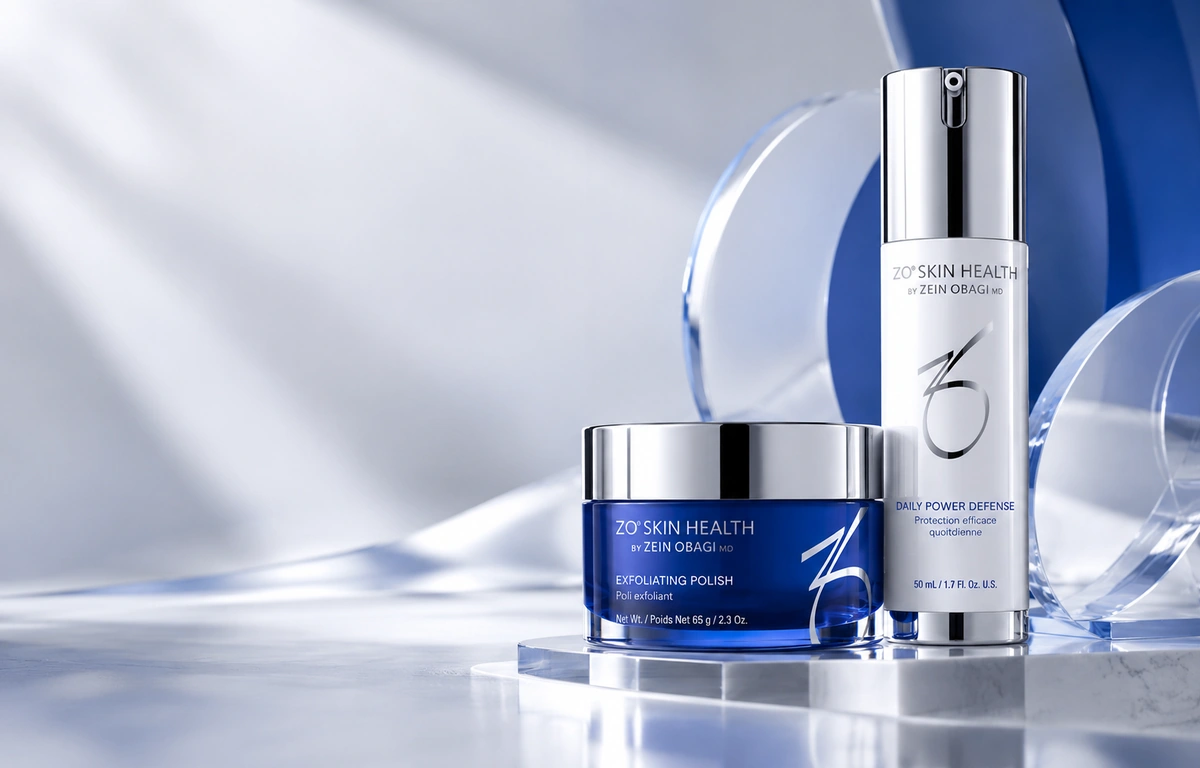
ZO Skin Health was founded by dermatologist Dr. Zein Obagi, who remains the company’s founder and medical director. The brand is headquartered in Irvine, California. For more than two decades, ZO has been developing professional skincare based on a clinical approach and consistent protocols.
The brand’s philosophy centers on maintaining healthy skin. Instead of correcting just one concern, ZO offers a system that combines skin preparation, targeted work on specific changes and subsequent protection.
The first stage involves cleansing, exfoliation and toning. Products are then selected according to the skin’s needs — for example, to address signs of premature aging, pigmentation, dehydration or other conditions. The third part of the system is aimed at protecting the skin from further damage.
Behind this seemingly simple framework is an extensive product and education system. ZO uses proprietary technologies for delivering active ingredients, specialized formulas and protocols, while professional training is an important part of the brand’s work.
In ZO’s approach, professional procedures and daily skincare are treated as parts of one system. For an aesthetic clinic, this is a practical model: the condition of the skin can be supported not only during a patient’s visit, but also over the weeks and months between procedures.
“ZO Skin Health has been my life’s work, and I am proud that the brand will join a company that shares our commitment to science,” said Dr. Zein Obagi, founder and medical director of ZO Skin Health (editorial translation).
After the announcement of the deal, an obvious question arises: why does Galderma need another professional skincare brand if it already has Alastin in its portfolio? The company’s answer is fairly clear: ZO Skin Health and Alastin serve different purposes.
ZO is focused primarily on multi-step daily skincare programs. Retinol, acids and other active ingredients play a prominent role in these programs, and the composition of a regimen can be adjusted according to the condition of the skin.
Alastin has a different profile. Its strengths are regenerative skincare, peptide technologies and support for the skin before and after aesthetic procedures. In other words, one brand is more focused on an ongoing at-home program, while the other is centered on periods directly related to a procedure and recovery.
Alongside them is Cetaphil, which operates in a much broader dermatological and consumer segment. As a result, Galderma gains three distinct skincare directions, rather than three brands offering the same products under different names.
This is an important detail of the transaction. The acquisition of ZO would not look nearly as logical if the brand simply duplicated Alastin. Instead, Galderma gains a separate system of protocols, its own professional audience and another way to work with patients beyond a specific procedure.
What does the acquisition change for Galderma and the aesthetic medicine market?
Galderma is building its business around three major areas: injectable aesthetics, dermatological skincare and therapeutic dermatology. The company’s portfolio includes Restylane, Sculptra, Dysport, Cetaphil, Alastin and other brands.
ZO Skin Health significantly increases the weight of professional skincare within this structure. At the same time, the significance of the deal goes far beyond the share of sales another brand may contribute.
Aesthetic medicine is gradually moving away from a model in which work with the patient is reduced to a single injection or device-based procedure. The condition of the skin before intervention, recovery afterward and at-home care between visits are increasingly viewed as components of one program.
For a clinic, this can mean an entirely different format of interaction. The patient comes not only for a procedure: they receive recommendations on preparing the skin, undergo the intervention itself, use products during the recovery period and then maintain the result at home. Interaction with the specialist is no longer limited to a single visit.
For Galderma, this model is especially attractive because the company already has strong positions in the procedural segment. Restylane, Sculptra and Dysport bring it to the same professional audience served by ZO and Alastin. The acquisition allows Galderma to deepen its cooperation with clinics without entering a completely new field for the company.
At the same time, Galderma is buying more than products. More than 16,500 physician practices, medical and aesthetic centers and online platforms, dedicated sales teams, training programs and usage protocols represent infrastructure that is difficult to build quickly, even for a large international company.
Professional education may become one of ZO’s most valuable assets. In this segment, it is not enough simply to place a product on the shelf: specialists need to understand how to combine products, which conditions they are intended for and how to adjust a program over time. Clinics’ trust in the brand directly depends on this.
After the deal closes, ZO will gain access to Galderma’s research, education and commercial resources. This could intensify competition among professional skincare brands, especially in markets where Galderma already has a well-developed network of collaboration with physicians.
The transaction value is also telling. Galderma is prepared to pay $1.5 billion for a business with approximately $330 million in net sales over the last 12 months. For a company that much of the market knows primarily for injectable aesthetics, this is a clear signal: professional skincare is no longer seen as a secondary add-on to procedures.
This area has another advantage: regularity. Injectable and device-based procedures are performed at certain intervals, while at-home skincare is used daily. For a manufacturer, this means a different frequency of interaction with the market, and for a clinic, it means the ability to continue a professionally guided program between visits.
That is why the deal fits well into the broader transformation of the aesthetic market. Large companies are gradually building not separate product categories, but portfolios capable of accompanying the patient at different stages — from daily skincare to an injectable procedure and recovery afterward.
What happens next?
For now, ZO Skin Health does not yet belong to Galderma. The signing of the agreement merely launches the final stage of the transaction. The companies still need to obtain the required regulatory approvals and satisfy other customary closing conditions.
Galderma expects to complete the process in the fourth quarter of 2026 or in early 2027. Until then, it is too early to draw conclusions about specific changes in ZO Skin Health’s distribution, product range or structure.
After the deal closes, the key indicators will be the scale of additional investment, the geography of further expansion and how clearly Galderma preserves the distinctions between ZO and Alastin. The company has already said that in the first year it plans to increase investment in commercial development, so the main changes will most likely be related not to cutbacks, but to scaling.
ZO has a strong starting base for this: more than 40 products, a presence in over 40 countries, more than 16,500 physician practices, medical and aesthetic centers and online platforms, its own education system and around $330 million in net sales over the last 12 months. Galderma adds to this a presence in approximately 90 countries, research resources and long-standing relationships with dermatologists and aesthetic clinics.
Ultimately, the acquisition of ZO Skin Health shows where Galderma’s strategy is heading: from individual products and procedures toward comprehensive work with the skin at different stages. The company already has strong positions in injectable aesthetics, and ZO adds systematic professional skincare that accompanies the patient every day. If Galderma can use its international network without diluting ZO’s professional model or its differences from Alastin, the $1.5 billion deal could become one of the most notable steps in strengthening its position at the intersection of dermatology, aesthetic medicine and professional skincare.