





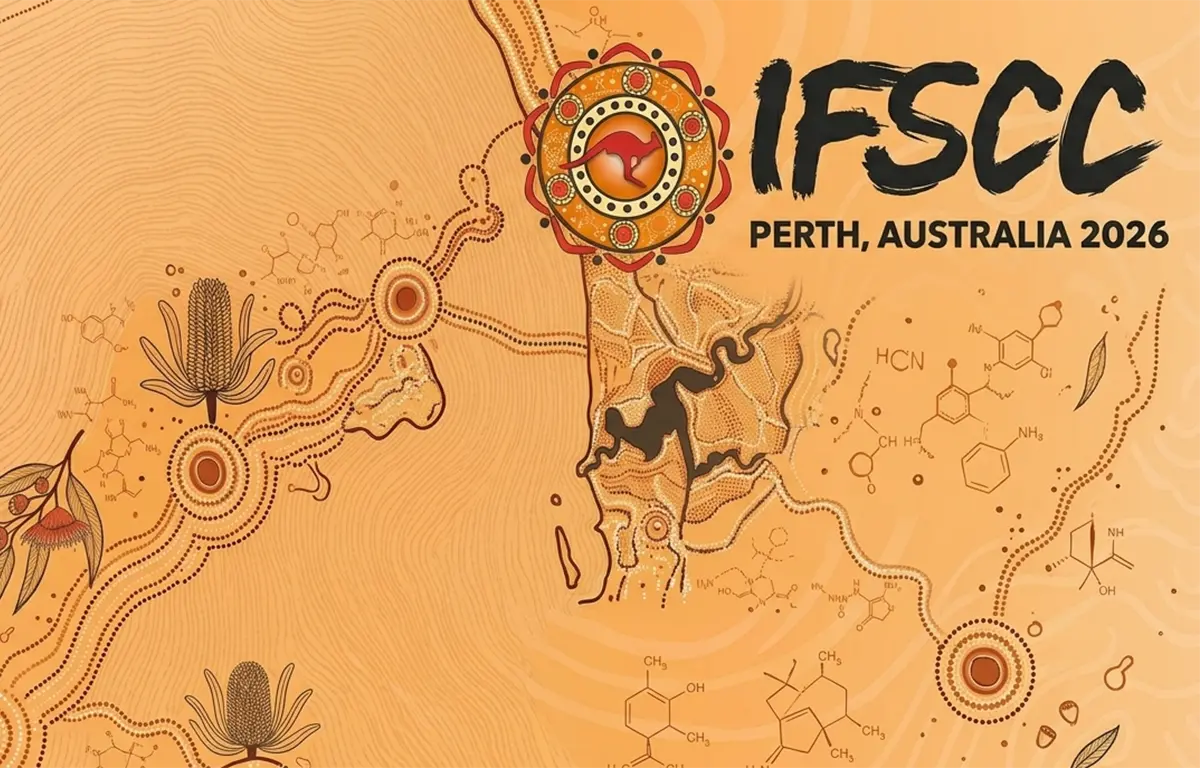
The theme of the 36th IFSCC Congress is Solving the Sustainable Beauty Equation. The focus will be on how to combine the effectiveness of cosmetic products, scientific innovation, and environmental responsibility without oversimplifying complex technological and regulatory challenges.
The scientific program covers a wide range of cosmetic science: photoprotection, formulation, skin research, microbiome, pigmentation, active ingredient delivery systems, cellular and molecular biology, neuroscience and sensory science, hair studies, analytical technologies, AI, and beauty technology. Separate sessions will be devoted to well-aging and longevity, bio-based raw materials, plant extracts, fragrances, and modern approaches to decorative cosmetics development.
Science that becomes a formula
A distinctive feature of IFSCC is that new beauty trends are examined here at the level of mechanisms, laboratory methods, and evidence. The program includes research on photoaging and SPF, the skin barrier, the microbiome, senescent cells, pigmentation, delivery systems, biotechnological ingredients, and methods for evaluating the efficacy of cosmetic products.
A prominent place is given to technologies that until recently were perceived mainly as promising directions: AI for active ingredient discovery and skin condition analysis, multi-omics, skin tissue models, new encapsulation systems, and personalized approaches to skincare. It is at events like this that you can see which ideas are already moving from research work to practical product development.
Separate workshops on sustainability, regulatory issues, and sun care are scheduled before the main program. Scientific presentations will be complemented by poster sessions, an exhibition area, and the ASCC & L’Oréal Sustainability Challenge, where projects in the field of sustainable cosmetic innovation will be presented.
Who will benefit from the congress
- cosmetic chemists and formulators;
- R&D specialists and researchers;
- cosmetics and personal care manufacturers;
- developers and suppliers of active ingredients;
- specialists in safety and efficacy testing;
- brands that invest in their own scientific developments;
- regulatory affairs specialists;
- companies working with biotechnology, sustainable beauty, and new manufacturing solutions.
The program runs in parallel in two main halls and includes a large number of podium presentations and posters, so participants should identify in advance the priority topics and research that best match their professional work.